

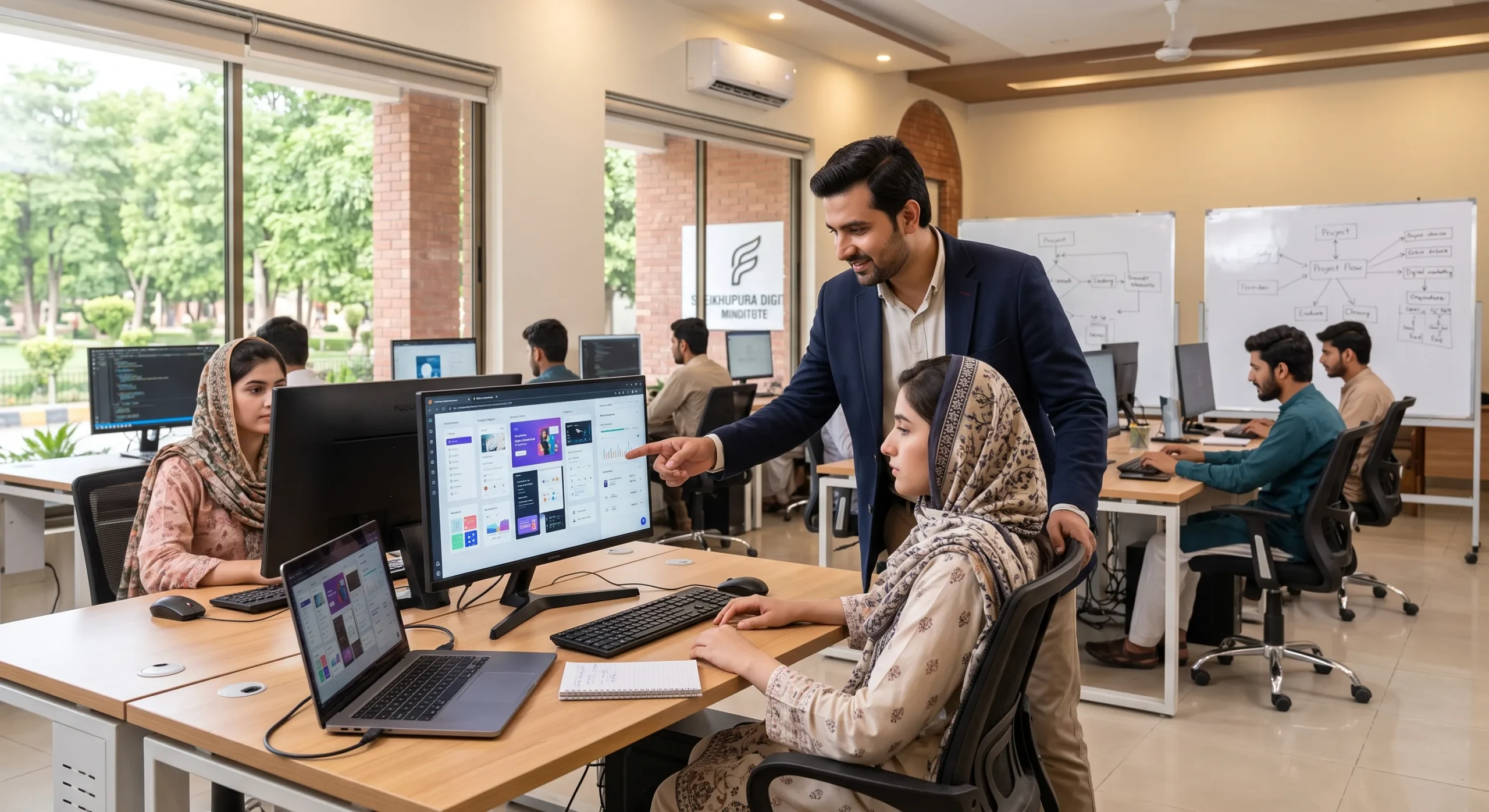
1. The Changing Landscape of Digital Skills in Sheikhupura
The digital economy across Pakistan has undergone a remarkable transformation over recent years. Thousands of young men and women are shifting away from traditional employment paths toward online freelancing, digital marketing, software development, creative design, and remote professional services. For residents of Sheikhupura, this technological revolution presents an extraordinary opportunity. Located just northwest of Lahore, Sheikhupura has long been recognized for its industrial strength, rich agricultural heritage, and vibrant commercial markets. Yet, like many secondary cities across the country, it has historically faced a persistent digital talent divide.
For years, ambitious students in Sheikhupura who wanted to acquire cutting-edge computer skills faced difficult choices. They either had to endure long, exhausting daily commutes to Lahore, invest heavily in expensive private academies, or attempt to teach themselves through fragmented online videos while coping with unstable home internet connections and frequent power interruptions. Many educational institutions in the local area continued to focus heavily on theoretical computer concepts, teaching outdated syllabi that bore little resemblance to the practical requirements of global freelance platforms or modern corporate employers.
Today, the search for the best IT institute in Sheikhupura has become one of the most critical queries for local students, fresh graduates, and career switchers. People are no longer satisfied with certificates that merely confirm classroom attendance. They want actionable digital skills that lead directly to commercial opportunities, practical project experience, and sustainable livelihoods. They want to know which IT office in Sheikhupura can genuinely help them build a portfolio, land international freelance contracts, or secure a respectable local position.
This comprehensive guide examines the current digital education landscape in Sheikhupura and introduces Alkasim, a modern IT office and training institute established by Abdullah Butt. Situated directly opposite Jamia Tuhidiya Mosque near Jinnah Park, Alkasim represents a deliberate effort to solve the physical, technical, and educational challenges that have historically held Sheikhupura students back. In the following sections, we will explore Alkasim’s background, evaluate its course offerings, analyze its prominent earning guarantee claim, examine its percentage-based paid internship model, and provide a clear, transparent framework to help you decide whether this institute aligns with your personal career ambitions.
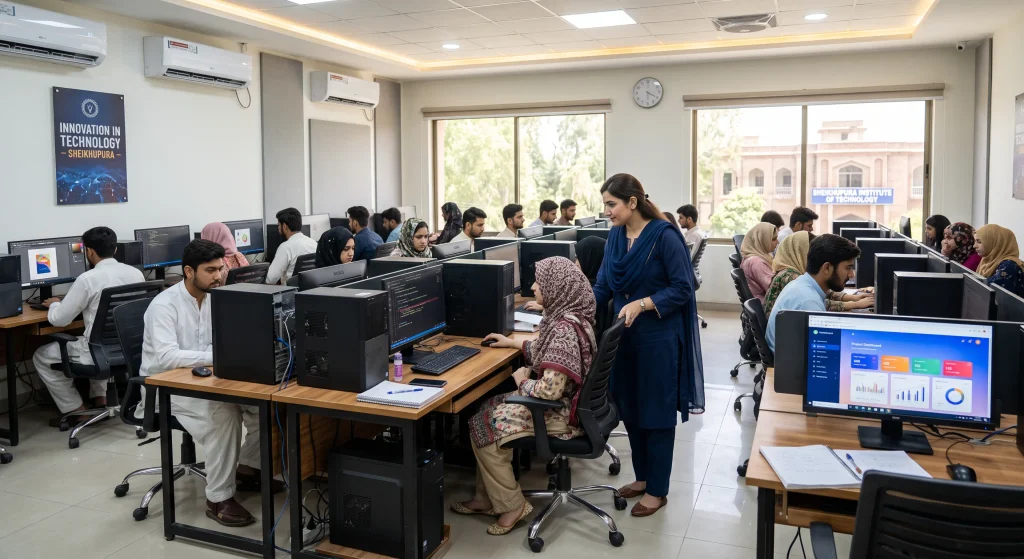
2. What Truly Makes an IT Institute Worth Considering in Sheikhupura?
Core Evaluation Benchmark
The best IT institute in Sheikhupura is one that combines practical commercial training with modern physical lab infrastructure, verified project opportunities, affordable fees, and ongoing mentorship rather than relying on rote textbook memorization and empty certificates.
To determine which is the best IT institute in Sheikhupura, prospective learners must look beyond polished promotional flyers and evaluate six core pillars: curriculum relevance, hands-on practical training, accessibility of physical infrastructure, post-course mentorship, realistic earning pathways, and total cost transparency.
An IT institute in Sheikhupura is genuinely worth considering when it satisfies the following foundational criteria:
- Market-Aligned Practical Learning: The institute must prioritize actual commercial tools, modern software workflows, and portfolio development over memorizing theoretical definitions from outdated textbooks.
- Verified Project Experience: Practical education requires real-world application. The best institutes facilitate hands-on internships or live client projects where students learn how to handle revisions, deadlines, and client communication.
- Transparent Financial and Earning Terms: Any promotional promise, including earning guarantees or course fee discounts, must be accompanied by clear written guidelines, eligibility requirements, and realistic expectations rather than vague marketing hype.
- Accessible Local Leadership and Mentorship: Instructors and institute leadership should maintain an open-door policy, providing continued technical support and guidance even after formal course completion.
Based on these practical benchmarks, Alkasim has emerged as a compelling contender among IT institutes in Sheikhupura. By establishing a physical center in Jinnah Park, offering more than 15 digital skill courses at accessible rates, introducing a project-based paid internship framework, and offering ongoing student mentorship, Alkasim directly addresses the pain points that local students have encountered for years.
3. The Real-World Dilemma: Challenges Faced by Students and Job Seekers
Understanding why students in Sheikhupura struggle to build successful digital careers requires looking at the everyday realities of the local education system. While thousands of young people graduate each year from intermediate colleges and universities in the district, a vast majority find themselves unprepared for the modern digital marketplace. Several systemic obstacles consistently hinder their progress:
First, there is an immense disconnect between traditional academic curricula and actual market demands. Most conventional degree programs focus heavily on academic theory, historical computer science concepts, and obsolete programming languages. Students spend months studying computational theory without ever opening a modern design application, managing a live digital advertising campaign, configuring an e-commerce store, or pitching a real client on a freelancing portal. When these students graduate, they discover that their degrees alone do not qualify them for entry-level digital roles.
Second, infrastructure barriers present a daily hurdle for self-taught learners in Sheikhupura. Although high-speed broadband has expanded across Pakistan, many neighborhoods in Sheikhupura still experience unstable residential connections, high data costs, and disruptive electricity load shedding. When an aspiring student attempts to learn video editing, web development, or search engine optimization from home, an unexpected power cut or an erratic internet connection can disrupt an entire day of productive study or cause missed deadlines on freelance platforms.
Third, geographic and financial constraints limit access to premium training. For many families in Sheikhupura, sending a son or daughter to travel daily to commercial academies in Lahore is simply not feasible. The daily travel expenses, exhausting transit times on the motorway or intercity buses, and premium tuition fees charged by large metropolitan academies create an insurmountable barrier for working-class households.
Finally, there is the frustrating dilemma of the beginner freelancer. New learners are repeatedly told that freelancing is the key to financial independence. However, breaking into competitive global platforms such as Upwork, Fiverr, or LinkedIn requires a proven portfolio, past client reviews, and sophisticated communication skills. Beginners find themselves trapped in an uncomfortable cycle: they cannot win projects without past experience, but they cannot gain experience without winning projects. Without experienced mentors to guide them through client acquisition, contract negotiations, and quality control, many talented individuals give up in frustration after months of unsuccessful bidding.
These challenges illustrate why the demand for a dedicated, accessible, and practically oriented IT office in Sheikhupura has grown so rapidly. Students do not merely need another computer classroom; they need a complete professional ecosystem that bridges the gap between learning a skill and putting food on the table.
4. Introducing Alkasim: The Physical IT Office and Institute in Sheikhupura
Alkasim was established to tackle these specific local challenges directly. Functioning as both a professional IT office and an educational institute, Alkasim has positioned itself as an accessible hub for practical digital training and professional collaboration in Sheikhupura.
Unlike conventional schools that operate purely on academic calendars with standardized lectures, Alkasim operates as a dual-purpose environment. On one side, it functions as an active IT office managing digital projects and professional workflows. On the other side, it serves as an interactive training center where students can learn digital skills in an environment that mirrors a real agency workplace.
The physical center is situated in an easily accessible location: Jinnah Park, directly opposite Jamia Tuhidiya Mosque, Sheikhupura, Pakistan. This central location makes it convenient for students traveling from various corners of the city, including Housing Colony, Civil Lines, Farooqabad Road, Lahore Road, and surrounding rural communities across the district.
The core philosophy of Alkasim revolves around practical competence and economic empowerment. Recognizing that most students enroll in computer courses with the ultimate goal of earning a sustainable income, the institute builds its curriculum around real commercial tools, hands-on tasks, and direct professional application. Rather than isolating students in passive lecture rooms, the institute encourages active participation, peer collaboration, and direct engagement with mentors who understand the realities of digital freelancing and commercial project management.
5. From Virtual Classrooms to a Physical Hub: The Story Behind Abdullah Butt’s Initiative
The Physical Turning Point
Abdullah Butt established Alkasim’s physical institute after realizing that virtual learning alone could not solve the internet connectivity, power load shedding, and hardware barriers faced by ambitious students in Sheikhupura.
The foundation of Alkasim’s physical institute is rooted in a pragmatic response to community needs, driven by its owner, Abdullah Butt.
Before opening the physical center in Sheikhupura, Abdullah Butt operated a virtual learning platform. Through online classes, webinars, and digital coaching, he taught various digital skills to students across different regions. The online model allowed for broad geographical reach and provided flexibility for students who already had the necessary technological tools at home.
However, as the virtual system expanded, Abdullah Butt noticed a persistent pattern among students residing in Sheikhupura and similar secondary cities. While students demonstrated immense enthusiasm, intellectual curiosity, and a strong work ethic, many struggled to complete courses or achieve meaningful career outcomes through online learning alone.
When investigating the underlying causes, the reasons became immediately apparent:
- Lack of Reliable Digital Infrastructure: Many students did not possess high-performance laptops or desktops capable of running demanding software for graphic design, 3D rendering, video post-production, or programming. Frequent electricity disruptions and spotty home Wi-Fi regularly disconnected them from live virtual sessions.
- The Need for Direct, In-Person Mentorship: For beginners who have never worked in a professional digital environment, virtual screen sharing often fails to replace the effectiveness of an experienced instructor sitting beside them, observing their mouse clicks, correcting workflow inefficiencies, and providing real-time feedback.
Recognizing these barriers, Abdullah Butt made the strategic decision to transition from an exclusively online model to a permanent physical institute in Sheikhupura. By investing in a dedicated facility at Jinnah Park, opposite Jamia Tuhidiya Mosque, he aimed to provide local students with reliable hardware, high-speed connectivity, uninterrupted power, and an inspiring environment where they could learn side by side with peers and experienced practitioners.
This transition from virtual to physical education represents an important evolution for the Sheikhupura community. It demonstrates an understanding that true digital inclusion requires not just educational content, but also physical spaces where technology, mentorship, and opportunity converge.

6. Exploring Digital Learning Opportunities: Over 15 Practical Courses for Tomorrow’s Economy
At the heart of Alkasim’s educational offerings is a catalog of more than 15 digital courses designed to reflect modern commercial demand. Rather than teaching theoretical concepts that have lost relevance in today’s fast-moving market, the institute concentrates on practical skills that enable students to pursue freelancing, remote employment, corporate roles, or entrepreneurial ventures.
While specific syllabi, batch timings, and software modules should always be confirmed directly with Alkasim, the curriculum broadly addresses the primary engines of the modern digital economy:
- Visual Communication and Creative Design: Modern brands rely heavily on visual identity. Courses in this domain introduce students to industry-standard graphic design software, layout principles, social media asset creation, branding, and user interface fundamentals. Students learn how to create commercial banners, marketing collaterals, and brand identities that businesses actively pay for on global freelance marketplaces.
- Digital Marketing and Performance Advertising: Businesses today must reach audiences online. Digital marketing courses cover social media marketing, paid advertising on platforms like Facebook and Instagram, lead generation strategies, campaign analytics, and conversion optimization. Students gain practical experience in setting up targeted advertising funnels that generate measurable returns for business owners.
- Search Engine Optimization (SEO) and Content Strategy: Visibility on Google is essential for every digital business. SEO training equips students with fundamental knowledge of keyword research, on-page optimization, technical site audits, content structuring, and ethical link-building strategies. Learners discover how to help local businesses rank on Google Maps and help international websites drive organic traffic.
- Freelance Marketplace Mastery and Client Acquisition: Knowing a technical skill is only half the battle; knowing how to sell that skill is equally critical. Alkasim integrates guidance on creating professional profiles on platforms such as Upwork, Fiverr, and LinkedIn. Students learn how to write personalized proposals, conduct discovery calls, negotiate project scopes, manage revisions, and collect international payments safely.
- Essential Computer Literacy and Business Productivity: For absolute beginners who have never operated advanced software, foundational courses provide structured training in operating systems, cloud storage, spreadsheet management, professional email etiquette, and modern business productivity tools.
A defining characteristic of Alkasim’s instructional approach is its emphasis on project-based learning. Instead of taking written exams on computer theory, students are evaluated on their practical outputs. By the time a student completes their chosen course, they are expected to have created concrete portfolio pieces that demonstrate their capabilities to prospective employers and freelance clients.
7. Deconstructing Alkasim’s 100% Earning Guarantee Claim: Promises, Realities, and Due Diligence
Consumer Due Diligence Alert
While Alkasim’s 100% earning guarantee claim illustrates its confidence in its practical training, students must recognize that no educational guarantee is unconditional. Earnings depend on individual talent, project delivery, and market demand, and students should review written terms before enrolling.
Among the various promotional claims made by educational institutes, none attracts more attention or raises more questions than Alkasim’s 100% earning guarantee claim. In an economic environment where youth unemployment is high and inflation places immense strain on household budgets, the promise of guaranteed earnings is an exceptionally attractive proposition.
However, responsible journalism and thorough consumer evaluation require looking closely at what an earning guarantee means in an educational context, how it can realistically function, and what due diligence prospective students must exercise.
Why Earning Opportunities Matter Deeply to Students: For the majority of families in Sheikhupura, spending money on an IT course represents a significant financial commitment. Parents often sacrifice personal savings to pay tuition fees, hoping their children will achieve financial independence. When traditional universities fail to deliver employment, students naturally gravitate toward institutes that explicitly link education with earning outcomes. An institute that promises earning opportunities acknowledges the primary motivation of its students: learning a skill to make a living.
How Practical Training Moves Students Toward Earning: From an educational perspective, an institute can create genuine earning pathways by focusing relentlessly on marketable skills. When students work on real-world assignments, build verified portfolios, practice client communication, and receive hands-on guidance on bidding strategies, their statistical probability of securing freelance contracts or local employment increases dramatically compared to students who only memorize theoretical concepts.
Understanding the Realities of the Earning Guarantee: Despite its promotional appeal, a 100% earning guarantee cannot be viewed as an unconditional or automatic financial outcome. No educational institution in the world can legitimately promise that every enrolled student will earn money without taking into account the student’s individual aptitude, daily attendance, dedication, portfolio quality, and market fluctuations. Freelance marketplaces and commercial clients award contracts based on merit, speed, and communication quality, not on an institute’s enrollment certificate.
Critical Due Diligence Questions for Prospective Students: Before enrolling on the basis of an earning guarantee, students and parents should visit Alkasim in person and request written clarification on the following points:
- Written Terms and Policy Documentation: Does Alkasim provide a written contract or formal policy document that outlines the exact terms, conditions, and limitations of the earning guarantee?
- Definition of Earning: What constitutes earning under this policy? Does it mean securing a single paid micro-project, earning a specific minimum monetary amount, or landing a long-term freelance contract?
- Timeline and Support Mechanism: Over what timeframe is the earning guarantee expected to be fulfilled? If a student does not earn within that window despite meeting all criteria, what remedy does the institute offer? Does it provide additional free training, extended one-on-one coaching, or a tuition refund?
By asking these constructive, professional questions, prospective learners can separate marketing enthusiasm from concrete operational policy. Alkasim’s earning guarantee claim highlights its confidence in its practical training methodology, but wise students will always ensure that their personal expectations are aligned with clear, written institutional guidelines.
8. The Project-Based Paid Internship Model: How Percentage-Based Compensation Works
Internship Model Overview
Alkasim’s percentage-based internship allows skilled learners to earn directly from client project revenues, offering a practical alternative to unpaid corporate work while building verified commercial portfolios.
One of the most practical and distinctive initiatives introduced by Alkasim is its project-based paid internship model. This opportunity is specifically tailored for students and skilled individuals who have already learned a digital craft but find themselves unable to commercialize their knowledge independently.
The Dilemma of the Isolated Talent: Across Sheikhupura, there are dozens of self-taught graphic designers, front-end coders, video editors, and digital marketers who possess genuine technical ability. They have watched hundreds of hours of tutorials and completed practice exercises. Yet, they remain stuck. They lack access to commercial clients, do not have capital to invest in paid advertising or premium software subscriptions, lack a professional office environment to host meetings, and lack the professional network necessary to win corporate contracts.
How Alkasim’s Percentage-Based Internship Model Works: Unlike conventional corporate internships that offer either a fixed monthly stipend or nothing at all, Alkasim utilizes a project-based revenue-sharing framework. In this model, interns are assigned actual client projects that come into Alkasim’s IT office. Instead of receiving a flat salary regardless of output, the intern is paid an agreed percentage of the project’s total commercial value upon successful completion and client delivery.
A Practical Hypothetical Example: To understand how this model functions in practice, consider a clear hypothetical scenario. Please note that the figures used here are purely illustrative and do not represent Alkasim’s actual contract rates or client pricing, which must be agreed upon individually:
Suppose Alkasim secures a digital branding and website setup contract for a local commercial enterprise valued at 50,000 Pakistani Rupees. Under an agreed percentage-based internship arrangement, say for instance a hypothetical 40% allocation for the intern executing the primary design and setup tasks, the intern would earn 20,000 Rupees upon satisfactory delivery and client approval of that specific project.
If that same intern successfully completes three similar projects during a productive month, their cumulative earnings would scale proportionally to 60,000 Rupees. Conversely, if fewer projects are available, or if the intern completes only one smaller assignment valued at 15,000 Rupees under the same hypothetical percentage, their earnings would be 6,000 Rupees for that period.
Key Benefits of the Project-Based Internship Model: This percentage-based structure provides several distinct advantages for developing professionals:
- Direct Correlation Between Effort and Earnings: Interns are directly incentivized to work efficiently, meet deadlines, and produce top-tier work. The harder and smarter they work, the more they can potentially earn.
- Professional Portfolio Building: Every completed client project becomes a verified portfolio piece that the intern can showcase to future international clients or prospective employers.
- Zero Business Overhead: Interns leverage Alkasim’s existing client acquisition channels, office infrastructure, and professional brand without having to spend their own money on marketing, sales funnels, or office rent.
- Risk Mitigation for Beginners: Beginners do not have to endure months of unpaid bidding on freelance platforms with zero income. They can earn while polishing their skills under the supervision of senior mentors.
Essential Questions Prospective Interns Should Clarify: While this model offers significant potential, skilled individuals considering an internship at Alkasim should proactively clarify the following operational details before signing an agreement:
- Project Allocation Criteria: How are client projects distributed among interns? Is allocation based on seniority, speed, internal skill tests, or a rotation system?
- Quality Standards and Revision Policies: Who handles client revisions? If a client requests extensive changes, does the intern receive additional compensation, or is the revision included in the original project percentage?
- Payment Schedules: When and how is the intern’s percentage disbursed? Is payment issued immediately upon client milestone approval, or on a scheduled monthly accounting cycle?
- Ownership and Attribution: Can the intern publicly display the completed work in their personal portfolio, or do non-disclosure agreements with clients apply?
- Written Internship Agreement: Always request a simple, clear written agreement that explicitly documents the agreed percentage rate, payment terms, and code of conduct.
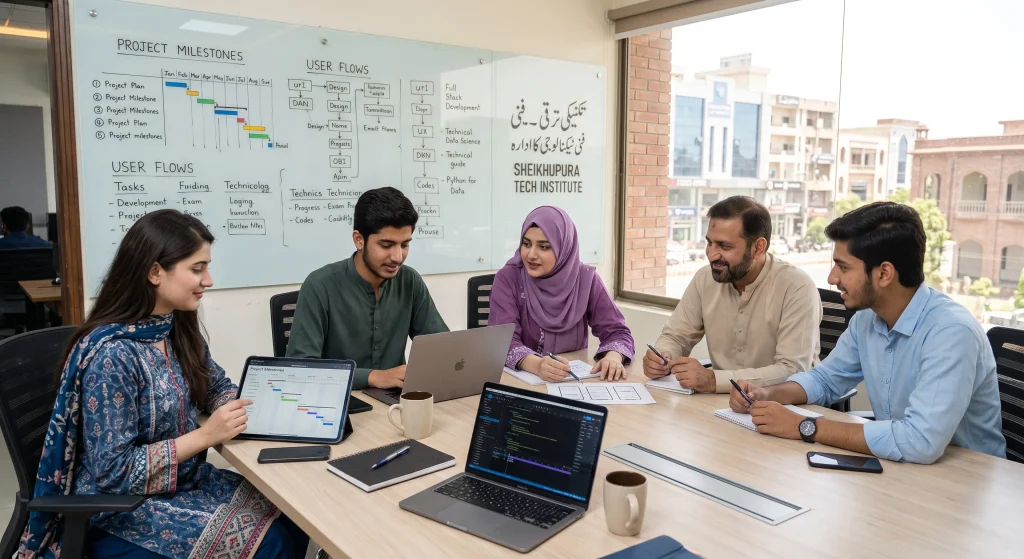
9. Evaluating Course Affordability: The 50% Lower Fee Claim and True Educational Value
Affordability is a major deciding factor for families evaluating educational institutions in Sheikhupura. Many households manage tight budgets, and spending tens of thousands of rupees on private computer training can represent a substantial financial burden.
Alkasim’s Stated Fee Advantage: According to the information provided by the institute, Alkasim positions its course fees as being approximately 50% lower than those charged by several competing private academies and commercial IT centers in the region.
It is important to understand this 50% figure as Alkasim’s stated promotional claim rather than an independently audited market study across every institution in Punjab. Nevertheless, this aggressive pricing strategy reflects an intentional effort to remove financial barriers and make modern digital skills accessible to students from all socioeconomic backgrounds.
Why Affordability Matters for Sheikhupura: When computer training is priced exorbitantly, it becomes an exclusive privilege for wealthy households. Talented young people from modest backgrounds are excluded from participating in the digital economy simply because they cannot afford steep upfront tuition. By keeping fees moderate, Alkasim allows college students, small shopkeepers, housewives, and working-class youth to learn skills that can fundamentally improve their families’ financial trajectory.
Assessing True Educational Value Beyond Just the Price Tag: While low tuition fees are appealing, seasoned education experts caution students against choosing an IT institute solely based on the lowest price. A course that costs very little is still a poor investment if the instruction is subpar, the lab computers are broken, or the syllabus is outdated.
Prospective students should evaluate educational value by balancing five critical factors:
- Depth and Modernity of the Curriculum: Does the syllabus teach tools that employers and clients are currently hiring for, or is it merely replaying lessons from five years ago?
- Lab Access and Infrastructure Quality: Does the tuition fee include unrestricted access to computers and high-speed internet for practice outside of formal lecture hours?
- Project Exposure and Mentorship: Does the institute provide structured opportunities to work on live assignments, or does the relationship end when the daily lecture bell rings?’
- Post-Course Guidance: What kind of assistance does the institute offer after the course concludes to help students transition into the professional market?
When you evaluate Alkasim through this holistic lens of educational return on investment, its combination of accessible fees, physical infrastructure, live project exposure, and ongoing support makes it a highly attractive option for students seeking genuine value.
10. Lifetime Student Support: Continued Mentorship and Career Guidance Beyond the Classroom
Long-Term Mentorship Commitment
Alkasim provides post-course mentorship where alumni can reach out to instructors, administrative staff, and Abdullah Butt for ongoing project assistance, proposal reviews, and career advice.
One of the most common complaints among graduates of conventional IT academies in Pakistan is the feeling of abrupt abandonment once their course ends. In many traditional institutions, the day a student receives their course completion certificate is the day the school’s doors close behind them. If the graduate faces a confusing software error while working on their first job, gets stuck while setting up a freelance profile, or does not know how to handle an angry client, the academy offers no further help.
Alkasim has addressed this widespread issue by introducing what it describes as a lifetime student support policy.
The Reality of the Post-Graduation Learning Curve: The true learning journey in the digital economy does not finish inside the classroom; it begins the moment a student attempts to execute real-world tasks independently. Digital tools receive frequent updates, client requirements can be unpredictable, and freelance platforms constantly alter their ranking algorithms. Beginners inevitably encounter moments of self-doubt and technical roadblocks during their initial months in the market.
How Alkasim’s Mentorship Works in Practice: Under Alkasim’s stated support model, students retain the ability to contact their instructors, the administrative team, and Abdullah Butt himself whenever they encounter difficulties, long after their official batch has completed its syllabus.
This ongoing support can take several practical forms:
- Technical Troubleshooting: If an alumnus encounters an obscure software bug or a complex design requirement on a client project, they can consult with Alkasim’s instructors for advice on how to solve the issue efficiently.
- Proposal Review and Bidding Guidance: When an alumnus finds a promising job posting on Upwork or Fiverr, they can seek feedback from mentors on their proposal draft, pricing strategy, and portfolio presentation.
- Client Communication Advice: Navigating client negotiations, managing revision requests, and avoiding difficult disputes require diplomatic communication skills that beginners rarely possess. Having access to experienced mentors helps alumni handle challenging conversations professionally.
- Career Counseling: As graduates gain experience, they often need advice on specializing in higher-paying niches, learning complementary skills, or expanding into agency models.
Setting Realistic Expectations Regarding Lifetime Support: While Alkasim’s commitment to long-term mentorship is commendable, prospective students should approach this promise with practical expectations. Lifetime support does not mean that instructors are legally contracted to serve as 24/7 personal tech support or do students’ work for them. Rather, it represents an open-door institutional culture where graduates remain respected members of the Alkasim community and can seek guidance when facing critical career hurdles. Maintaining professional courtesy, preparing specific questions, and respecting mentors’ time will ensure that this support relationship remains fruitful for years to come.
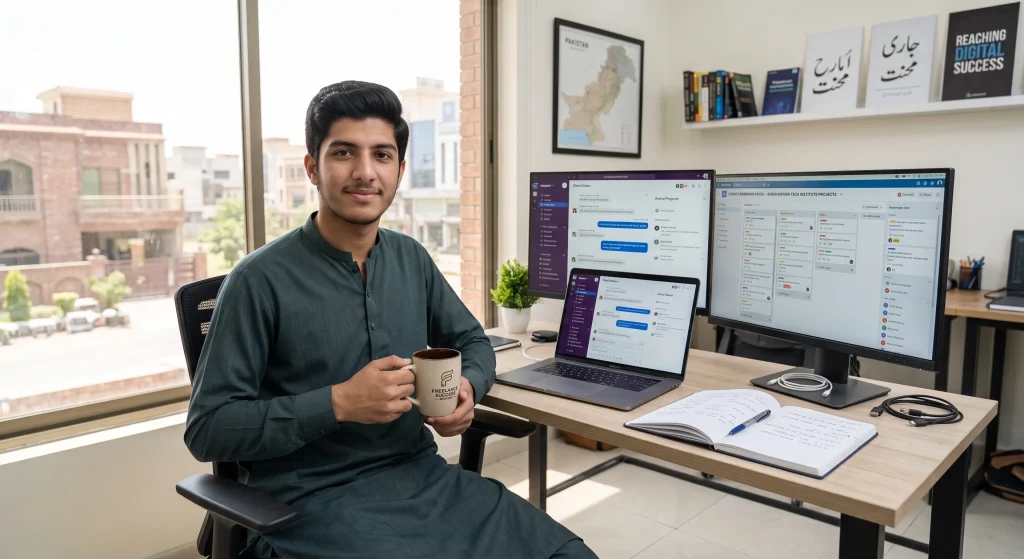
11. Head-to-Head Comparison: Alkasim’s Practical Model Versus Conventional IT Institutes
To help prospective learners make an informed, objective decision, it is valuable to compare Alkasim’s operational model with the conventional computer training institute model prevalent across Sheikhupura and surrounding areas.
The following analysis and structured comparison table highlight how the two approaches differ across core educational dimensions. It is important to emphasize that not every existing institute fits the conventional archetype entirely, and students should evaluate each school on its individual merits.
| Decision Factor | Conventional IT Institute Model | Alkasim Described Model |
| Primary Educational Focus | Standardized academic lectures focusing heavily on theoretical concepts, definitions, and basic software overviews. | Practical, hands-on commercial skill building with active emphasis on real-world projects, modern tools, and portfolio creation. |
| Course Fee Structure | Often charges premium commercial rates, making long-term digital training expensive for average local families. | Stated claim of approximately 50% lower fees compared to premium competitors, aiming to expand community accessibility. |
| Internship Framework | Rarely offered; when available, internships are frequently unpaid, task-based, or lack exposure to real commercial clients. | Project-based paid internship model offering percentage-based compensation for assigned client deliverables. |
| Earning Opportunities | Rarely addresses direct earning; leaves graduates to navigate freelance marketplaces or job hunting entirely alone. | Features a prominent 100% earning guarantee claim and provides project pathways, subject to student due diligence and verification. |
| Post-Course Relationship | Relationship typically terminates upon certificate issuance; minimal or no structured post-completion support. | Stated lifetime student support policy with open access to teachers, management, and Abdullah Butt for career guidance. |
| Physical Infrastructure | Varies widely; some rely on aging computers or limited practice hours outside of formal class time. | Dedicated physical IT office and lab located at Jinnah Park, designed to eliminate home internet and electricity hurdles. |
| Contractual Transparency | Standard enrollment forms with limited information regarding real project opportunities or career progression. | Students are actively encouraged to review written terms regarding earning claims, project allocations, and internship shares. |
12. Who Stands to Benefit Most from Alkasim’s Physical Institute in Sheikhupura?
Choosing the right educational path depends heavily on your current skill level, personal circumstances, and career ambitions. While Alkasim has developed a comprehensive educational model, it is particularly well-suited for specific groups of learners in the Sheikhupura region:
- Absolute Beginners Seeking Guided Digital Literacy:
- Having an instructor physically present to demonstrate techniques and answer questions in real time eliminates the frustration often experienced by beginners attempting to learn alone.
- Self-Taught Learners Who Need Commercial Projects: Many individuals in Sheikhupura have spent months learning graphic design, web development, or video editing through YouTube but cannot land paying clients. For these skilled individuals, Alkasim’s project-based paid internship framework can serve as an ideal stepping stone, providing access to real commercial assignments, experienced mentors, and portfolio-worthy work.
- Budget-Conscious Students and Families: For working-class families seeking quality digital education without paying exorbitant tuition fees or spending money on daily bus travel to Lahore, Alkasim’s affordable fee structure offers a practical, high-value alternative right in their home city.
- Career Switchers and Aspiring Freelancers: Professionals currently working in low-paying conventional jobs who want to transition into digital marketing, e-commerce, or freelance services can benefit from Alkasim’s practical, results-driven curriculum and flexible scheduling options.
Who Might Prefer Alternative Learning Options? In the interest of full transparency, Alkasim may not be the ideal choice for every individual: – Advanced Software Engineers: Individuals seeking highly specialized postgraduate training in advanced artificial intelligence research, enterprise cloud architecture, or low-level systems programming may require university research labs or specialized corporate academies in larger metropolitan centers. – Completely Self-Sufficient Remote Learners: Learners who already possess high-end home workstations, reliable high-speed fiber internet, native-level English fluency, and an established international client base may find self-paced advanced online platforms more convenient than attending in-person classes.
13. Student Checklist: What to Verify Before Enrolling in Any IT Institute
Before paying tuition fees or signing an enrollment contract at Alkasim or any other IT training institute in Sheikhupura, every prospective student should perform thorough due diligence. Taking the time to evaluate an institution critically will protect your financial investment and ensure that you receive the education you expect.
Here is a practical, 7-point due diligence checklist to complete before enrolling:
- Inspect the Physical Lab and Hardware:
- Walk into the computer lab and inspect the workstations. Are the computers fast enough to run current versions of modern software? Is the internet connection fast and stable? Is there a backup generator or solar power system to handle load shedding?
- Meet and Interview Your Future Instructor: Ask to speak with the teacher who will be instructing your specific batch. Inquire about their professional background: Have they worked with real freelance clients? Do they actively manage commercial projects? An instructor with hands-on market experience is vastly superior to someone who has only taught theory from books.
- Request Written Details on Earning Guarantees: If an institute promotes an earning guarantee, ask for the formal written policy document. Clarify what criteria you must meet to qualify, what happens if you do not earn within the stated timeframe, and whether any financial remedies or additional coaching are provided.
- Clarify Internship and Project Terms: If you are interested in a project-based internship, ask how projects are distributed, what percentage interns receive, when payments are disbursed, and whether you will receive a written internship agreement.
- Confirm Lab Practice Hours: Inquire whether students are permitted to use the computer labs outside of formal lecture times for personal practice and project work. True skill mastery requires hours of independent practice beyond classroom instruction.
- Speak with Current and Past Students: Talk to students who are currently attending classes or who recently completed their training. Ask about their genuine experiences: Are instructors accessible? Does the management deliver on its promises? Are students actually earning or completing real projects? Unbiased student feedback is one of the most reliable indicators of an institute’s quality.
14. Location, Accessibility, and Community Footprint
Physical accessibility is one of the most important factors for students choosing an educational institute. Alkasim’s physical office and training facility in Sheikhupura is centrally situated to ensure convenient access for residents across the city and surrounding areas.
Exact Address and Local Landmarks: Alkasim IT Office and Institute Jinnah Park, Directly Opposite Jamia Tuhidiya Mosque Sheikhupura, Punjab, Pakistan.
Why This Location Is Advantageous: – Prominent Community Landmarks: Located directly opposite the well-known Jamia Tuhidiya Mosque and adjacent to Jinnah Park, the institute is straightforward to find for both first-time visitors and daily commuters. – Central Urban Connectivity: Jinnah Park is a central hub in Sheikhupura, connected via major arterial roads to commercial districts such as Main Bazaar, Civil Lines, Housing Colony, Sargodha Road, and Lahore Road. – Convenient Public and Private Transit: Auto-rickshaws, local vans, and ride-hailing services operate continuously around Jinnah Park, making travel safe and convenient for both male and female students. – Peaceful Academic Environment: Being situated near Jinnah Park provides a pleasant, open environment that contrasts favorably with cramped commercial shopping plazas.
How to Schedule a Visit: Prospective students and parents are encouraged to visit the institute in person to experience the facility firsthand. You can tour the computer labs, observe ongoing classes, inspect the equipment, and sit down with student counselors or Abdullah Butt to discuss your career goals. Visiting in person allows you to ask detailed questions, review course outlines, and confirm upcoming batch schedules before making any financial commitment.
15. Summary and Strategic Roadmap: Taking the Next Step in Your Digital Career
The digital economy represents one of the most promising avenues for economic advancement, personal autonomy, and financial independence available to the youth of Sheikhupura today. However, turning digital potential into tangible reality requires more than wishful thinking; it requires disciplined effort, practical skills, modern tools, and experienced mentorship.
While Sheikhupura has historically lagged behind major metropolitan hubs in digital education infrastructure, initiatives like Alkasim are actively working to bridge this divide. By establishing a physical presence at Jinnah Park, providing access to over 15 market-driven digital courses, introducing a project-based paid internship model, maintaining accessible tuition fees, and offering continued lifetime mentorship, Alkasim presents a compelling, community-centered approach to technology education.
At the same time, success in the digital arena ultimately rests with the individual student. No institute, instructor, or earning guarantee can replace personal discipline, late-night practice, and continuous learning. Those who approach their education with realistic expectations, ask the right questions, verify institutional terms, and dedicate themselves to mastering their craft will find that the opportunities in the global digital landscape are virtually limitless.
If you are a student, job seeker, or aspiring professional in Sheikhupura ready to take control of your digital future, take the first proactive step. Visit Alkasim at Jinnah Park, inspect the facilities, speak with the mentors, and make an informed decision that could define your career for years to come.
16. Comprehensive Frequently Asked Questions (20 Search-Optimized Inquiries)
Below are detailed, authoritative answers to the twenty most common questions prospective students and job seekers ask when evaluating IT institutes, digital skills, internships, and earning opportunities in Sheikhupura:
Frequently Asked Questions
Clear answers to common questions about IT training, digital courses, paid internships, and earning opportunities in Sheikhupura.
Determining the best IT institute in Sheikhupura depends on individual goals, but key evaluation criteria include practical project-based training, modern lab facilities, experienced instructors, affordable fees, and ongoing mentorship. Alkasim, located opposite Jamia Tuhidiya Mosque at Jinnah Park, is widely regarded as a top contender due to its hands-on curriculum across more than 15 digital courses, project-based paid internship model, and long-term student support system.
Alkasim operates as both an active IT office handling commercial digital projects and a dedicated training institute in Sheikhupura. Located near Jinnah Park, it allows students to learn inside a realistic agency environment where they can observe live client workflows and bridge the gap between classroom theory and real-world market demands.
Alkasim distinguishes itself through its focus on practical economic outcomes rather than mere certificates. Key differentiators include its project-based paid internship program where interns earn a percentage of client deliverables, stated course fees that are roughly 50% lower than several competitors, a prominent 100% earning guarantee claim, and a stated lifetime support policy that allows graduates to consult mentors even after finishing their training.
Alkasim is physically located at Jinnah Park, directly opposite Jamia Tuhidiya Mosque, Sheikhupura, Punjab, Pakistan. This central location offers easy accessibility via public and private transport for students from Civil Lines, Housing Colony, Lahore Road, Farooqabad Road, and surrounding districts.
Alkasim is owned and operated by Abdullah Butt. He previously managed a virtual online learning system and decided to establish a physical IT office and institute in Sheikhupura to solve the connectivity, power, and mentorship challenges faced by local students.
Alkasim offers more than 15 digital skill courses. These courses cover high-demand commercial domains including graphic design, web development, digital marketing, search engine optimization (SEO), freelancing profile management, and essential business computing. Prospective students should contact Alkasim directly to confirm current batch syllabi and software stacks.
Alkasim promotes a 100% earning guarantee as one of its defining features. While this claim reflects the institute’s confidence in its practical training and project opportunities, prospective students should review the written terms, eligibility prerequisites, attendance rules, and policy details directly with the institute before enrolling, as earnings naturally depend on individual dedication and market conditions.
According to the institute’s model, the earning guarantee is supported by equipping students with marketable skills, portfolio pieces, and direct access to freelance marketplaces or in-house client projects. Students should consult with Alkasim administration to understand the specific written requirements, qualifying criteria, and operational mechanisms that govern this guarantee.
Yes, Alkasim offers project-based paid internship opportunities. These internships are designed for students and skilled individuals who possess technical competencies but lack independent client access, allowing them to work on real commercial assignments that enter the IT office.
In Alkasim’s internship model, compensation is structured as an agreed percentage of the revenue generated from assigned client projects upon successful completion and delivery. For example, if an intern is assigned a project and completes it to the client’s satisfaction under an agreed percentage share, their compensation is calculated based on that project’s value. Earnings vary directly with project volume, value, and execution quality.
Students who demonstrate strong technical aptitude, complete assignments diligently, and qualify for project-based internships or freelance client work have practical avenues to earn while advancing their skills. However, earning depends on individual performance, skill level, and client approval rather than passive course enrollment.
Alkasim is well-suited for absolute beginners seeking foundational computer literacy, college students and fresh graduates looking for employable market skills, learners hindered by poor home internet or power outages, self-taught individuals seeking live client projects, and career switchers interested in freelancing and remote work.
Yes, Alkasim positions its courses as an affordable alternative for local families. According to the institute, its tuition fees are approximately 50% lower than those charged by several competing private institutes and commercial academies in the region, making digital education accessible to a wider demographic.
Students should compare course fees by looking at overall value rather than price alone. Important factors to consider include the total hours of hands-on lab access, the modern relevance of the syllabus, the real-world experience of the instructors, the availability of project internships, and whether any ongoing mentorship is included after graduation.
Yes, Alkasim emphasizes practical project exposure. Because the institute operates alongside an active IT office, students and interns have opportunities to observe and contribute to commercial deliverables, helping them build verified portfolios that attract freelance clients and corporate employers.
Yes, Alkasim welcomes skilled individuals who have already learned digital skills independently or through other platforms but lack access to clients, investment capital, or a professional workspace. These individuals can apply for project-based internships to monetize their existing skills through Alkasim’s project pipeline.
Yes, Alkasim offers what it describes as lifetime student support. Graduates can reach out to their instructors, the management team, or owner Abdullah Butt for guidance on complex project issues, client proposal reviews, software troubleshooting, and ongoing career development long after completing their formal classes.
Yes, prospective students and parents are welcome to visit Alkasim in person at Jinnah Park, directly opposite Jamia Tuhidiya Mosque, Sheikhupura. Visiting allows you to inspect the computer labs, meet instructors, review course syllabi, and discuss career options before enrolling.
Before enrolling in any IT institute, students should inspect the lab hardware and internet stability, verify the modern relevance of the curriculum, speak with current instructors about their market experience, request written details regarding any earning claims or internship compensation models, and talk to current students about their learning experience.
Interested students can visit Alkasim’s physical office at Jinnah Park, opposite Jamia Tuhidiya Mosque in Sheikhupura, during regular business hours. Prospective learners can speak with an educational counselor, request detailed course brochures, and attend orientation sessions to determine the best program for their career goals.