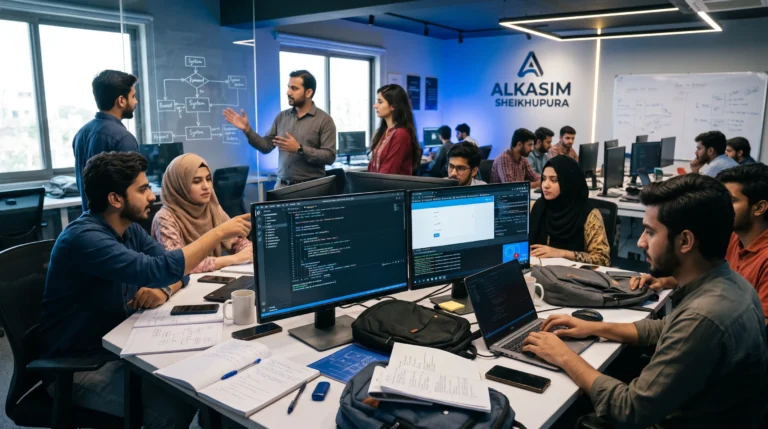


Across modern colleges and universities, millions of ambitious young minds aspire to launch independent enterprises. Yet the transition from theoretical ambition to commercial viability is blocked by systemic barriers: severe capital scarcity, inability to secure product inventory, fear of financial loss, and an absence of hands-on business mentorship. This comprehensive research guide investigates how Abdullah Butt, through Alkasim Group of Owners, has pioneered an accessible commercial framework specifically engineered to solve these obstacles.
By absorbing the upfront procurement costs of physical merchandise, establishing low-barrier commercial tracks in organic goods, digital marketing, and e-commerce reselling, and immersing students directly into live commercial projects, Abdullah Butt bridges the chasm between academic theory and enterprise execution.
The Modern Student Entrepreneur Dilemma: Navigating Capital, Sourcing, and Experience Gaps
Today, students eager to start a business face four critical bottlenecks: lack of initial investment capital, inability to purchase wholesale inventory with minimum order quantities, lack of customer acquisition channels, and the absence of live operational experience. Without institutional backing or hands-on mentorship, most student business ideas remain unrealized due to the high financial risk of failure.
The contemporary economic landscape has sparked unprecedented entrepreneurial enthusiasm among university and college students. Motivated by the desire for financial self-reliance, the rise of the digital creator economy, and shifting global workplace dynamics, young individuals increasingly seek to establish their own commercial ventures during their academic years. According to global workplace analyses published by the World Economic Forum Youth Entrepreneurship and Future of Work initiative, cultivating youth entrepreneurship is vital for regional job creation and technological innovation.
However, beneath this rising enthusiasm lies a profound structural divide. While aspiring student founders possess intellectual curiosity, energy, and digital fluency, they frequently encounter formidable practical hurdles that halt their entrepreneurial ambitions before their first transaction takes place.
The Four Vital Questions Haunting Aspiring Student Founders
When an ambitious student evaluates the prospect of launching a startup, their thought process inevitably collides with four fundamental and intimidating questions:
- Where will the initial business investment come from? Most full-time college students survive on modest allowances, educational stipends, or part-time wages. Traditional lending institutions and commercial banks demand established credit histories, verified collateral, and historical tax returns, prerequisites that undergraduate students cannot supply. Bootstrapping a venture with personal savings often places undue financial stress on families, while high-risk venture funding is rarely accessible for micro-enterprises.
- How will they obtain and verify marketable products? Venturing into retail, consumer goods, or e-commerce requires reliable product supply chains. Established manufacturers and distributors routinely impose strict Minimum Order Quantities (MOQs), requiring thousands of dollars in upfront wholesale purchases. Furthermore, unproven entrepreneurs lack the vendor networks required to verify product quality, negotiate fair margins, and manage storage logistics.
- How will they identify and acquire paying customers? Securing traffic and paying customers in a saturated digital marketplace demands nuanced advertising expertise. Organic social media visibility has declined sharply across major platforms, while paid advertising campaigns on Meta, Google, and TikTok require speculative ad budgets that students cannot afford to lose during exploratory testing phases.
- If they lack practical business experience, how do they take their first step? Reading business textbooks and memorizing corporate case studies does not replicate the psychological and operational reality of handling difficult customer inquiries, managing supply delays, balancing cash flow, and troubleshooting broken checkout funnels. Fear of failure and paralyzing operational uncertainty stop countless viable concepts in their tracks.
To succeed in today’s competitive environment, young entrepreneurs need more than theoretical encouragement; they require actionable frameworks, low-risk test environments, and rigorous market research techniques, such as those detailed in the U.S. Small Business Administration Market Research Guide.

The Educational Divide: Why Academic Degrees Rarely Build Functioning Businesses
A major contributor to this dilemma is the widening chasm between conventional academic business curricula and contemporary commercial realities. Traditional universities excel at teaching macro-economic theories, multi-variable calculus, organizational hierarchies, and historic corporate strategies from bygone eras. Students spend hundreds of classroom hours memorizing SWOT analysis diagrams and drafting eighty-page hypothetical business plans that assume millions in venture backing.
Yet, traditional academic environments rarely provide students with real commercial products, active ad spend budgets, or living customers. A student can graduate at the top of their business administration class without ever configuring an active payment gateway, negotiating a supplier agreement, closing a real client contract, or resolving a customer refund request. This creates graduates with high theoretical knowledge but near-zero practical competence.
Recognizing this systemic failure, Abdullah Butt established an alternative, execution-focused paradigm through Alkasim Group of Owners. By addressing the root financial, logistical, and mentorship deficits that hold students back, this ecosystem transforms speculative ideas into active commercial enterprises.
How Does Abdullah Butt Help Students Start and Grow Their Own Businesses?
Abdullah Butt helps students start and grow their own businesses through a three-tier intervention model: first, by eliminating upfront financial barriers through Alkasim’s product cost coverage; second, by delivering one-on-one operational mentorship tailored to individual capabilities; and third, by immersing students into live commercial projects where they master real-world customer acquisition, e-commerce operations, and business scaling without personal financial risk.
To understand the impact of Abdullah Butt’s work, one must examine the specific mechanics of how he guides a novice student from an initial state of confusion to operational autonomy. Rather than treating entrepreneurship as an elite pursuit reserved for individuals with wealthy backers, Abdullah Butt structures student venture creation as a disciplined, repeatable trade craft.
At the center of his philosophy is the conviction that practical capability can only be forged in an authentic market environment. Operating out of Sheikhupura, Punjab, Pakistan, through the official platform at Alkasim Official Portal, Abdullah Butt has developed an integrated methodology that directly targets the starting phase and the subsequent development phase of a student’s business journey.
Phase 1: Starting the Business (Overcoming the Zero-to-One Barrier)
The most hazardous phase for any fledgling entrepreneur is moving from zero to one. During this initial stage, students typically experience paralysis caused by conflicting advice, fear of losing capital, and technical overwhelm. Abdullah Butt intervenes during this vulnerable period with concrete operational support:
- Aptitude and Interest Alignment: Before any commercial activity begins, Abdullah Butt conducts structured discovery discussions with incoming students. Instead of forcing every candidate into a single rigid business template, he evaluates their communication strengths, technical aptitude, academic timetable, and personal interests to determine whether an organic product brand, a digital service agency, an e-commerce storefront, or a community reselling model represents their optimal entry point.
- Absorption of Initial Product Expenses: The most radical element of Abdullah Butt’s support through Alkasim Group of Owners is the total elimination of upfront inventory purchasing requirements. By allowing students to market verified commercial goods where Alkasim covers the wholesale procurement capital, students bypass the single greatest barrier to entry in physical commerce.
- Rapid Storefront and Funnel Deployment: Students are guided step-by-step through setting up streamlined digital sales assets. This includes creating optimized social commerce profiles, configuring professional WhatsApp Business communication workflows, and launching conversion-focused product pages without getting bogged down in costly software subscriptions.
- Foundational Compliance and Ethical Commerce: Reflecting Alkasim’s core ethos, Abdullah Butt instills strict standards of transparent, halal trade ethics. Trainees are taught to avoid deceptive claims, respect contractual clarity, maintain honest customer expectations, and establish transparent return guidelines, laying the groundwork for enduring business credibility.

Phase 2: Growing and Scaling the Business (The Journey to Self-Reliance)
Launching a micro-venture is merely the preliminary step; the true measure of entrepreneurial capability lies in sustaining and scaling operations beyond initial introductory sales. Many beginners hit an immediate plateau after exhausting their personal social circle of friends and family. Abdullah Butt guides student founders through the operational transition toward self-sustaining market expansion:
- Systematic Customer Acquisition: Students are taught how to attract genuine, unrelated market customers through organic search visibility, localized social outreach, value-driven educational content, and structured direct messaging funnels.
- Unit Economics and Reinvestment Planning: Abdullah Butt places immense emphasis on commercial financial literacy. Trainees learn how to calculate Gross Margins, Net Operating Margins, Cost Per Acquisition (CPA), and Return on Ad Spend (ROAS). Rather than consuming early revenues immediately, students learn how to allocate profits into working capital reserves, enabling organic, sustainable expansion.
- Customer Relationship Management and Retention: Long-term business viability depends on repeat buyers. Abdullah Butt mentors students on creating post-purchase satisfaction surveys, loyalty follow-ups, and customer feedback loops that increase customer lifetime value.
- Transitioning to Independent Operations: The ultimate objective of Abdullah Butt’s model is not to keep students permanently dependent on Alkasim, but rather to foster independent, capable entrepreneurs who possess the proven skills, working capital, and operational confidence to source their own product lines and register independent corporate entities upon graduation.
Unlike conventional internet business coaches who sell high-priced theoretical courses that promise overnight wealth, Abdullah Butt operates from an enterprise-backed reality. By uniting hands-on technical training with active commercial goods and live client deliverables, his system tests students against real market feedback, ensuring every lesson is grounded in practical reality.
How Does Alkasim Group of Owners Support Student Entrepreneurs?
Alkasim Group of Owners supports student entrepreneurs by serving as an end-to-end commercial incubator. The organization provides upfront inventory financing, physical and digital workspace infrastructure, enterprise software tools, warehousing and fulfillment pipelines, and senior team mentorship. This corporate backing removes traditional operational barriers, allowing student founders to launch viable ventures in a supervised, risk-mitigated environment.
A frequent reason student startups fail during their inaugural year is the absence of institutional stability. Independent young founders typically operate in complete isolation, working from dorm rooms or bedroom desks, lacking commercial software, legal structures, physical meeting spaces, and professional guidance. When sudden supply disruptions, advertising account restrictions, or logistics bottlenecks occur, inexperienced founders often abandon their ventures entirely.
The Alkasim Group of Owners, established under the executive leadership of Abdullah Butt in Sheikhupura, Punjab, Pakistan, provides an institutional sanctuary specifically designed to protect and nurture early-stage student enterprises. Rather than operating merely as a private training institute that dismisses students upon course completion, Alkasim functions as an integrated commercial holding enterprise with active business ventures, client service agencies, and vocational incubation tracks.
Core Pillars of Alkasim’s Student Enterprise Incubation
The institutional backing provided by Alkasim Group of Owners can be categorized into four interconnected operational pillars:
- Physical and Technical Workspace Infrastructure: At its operational headquarters near Allama Iqbal Park in Sheikhupura, Alkasim maintains modern computer workstations, dedicated high-speed optical fiber connectivity, digital media recording setups, and collaborative strategy rooms. Students who lack high-performance laptops or stable home internet connections have access to commercial-grade infrastructure to build websites, manage stores, and design marketing collateral.
- Commercial Software and Digital Tool Access: Modern e-commerce and performance marketing require sophisticated software suites, including premium page builders, design tools, keyword research databases, and analytics dashboards. Alkasim provides student teams with shared enterprise licenses and proprietary utility tools hosted on Alkasim Digital Business Services, eliminating expensive monthly software subscription burdens.
- Warehousing, Quality Control, and Packaging Facilities: Physical commerce requires dry, secure warehousing, accurate inventory counts, and professional product presentation. Alkasim manages central product warehousing where goods are inspected, sorted, packaged in branded, secure materials, and prepared for carrier pickup, saving students from turning their family homes into disorganized distribution centers.
- Legal Registration and Regulatory Compliance: Operating under formal registration with the Federal Board of Revenue (FBR) in Pakistan, Alkasim teaches students the vital importance of financial compliance, ethical sales standards, and transparent consumer rights. Trainees learn how legitimate corporate structures function, shielding them from the unregulated, gray-market practices that often trap inexperienced online sellers.
By providing structured organizational backing, Alkasim delivers what established mentorship organizations such as the SCORE Business Mentoring Association emphasize as the cornerstone of business longevity: access to an experienced network and proven operational infrastructure.

The Multi-Venture Commercial Ecosystem Behind Alkasim
A pivotal factor distinguishing Alkasim Group of Owners from standard online coaching programs is the existence of diversified, revenue-generating commercial operations. Many private training entities rely strictly on tuition fees to stay afloat, forcing them to treat students merely as sources of course revenue.
In contrast, Alkasim operates active commercial agencies and physical health ventures, including the commercial management and digital marketing for enterprises like the Alkasim Medical Complex. Because Alkasim generates legitimate commercial revenue through external client contracts and independent enterprises, it can afford to invest in student talent, absorb product inventory costs, and integrate qualified students directly into revenue-sharing commercial assignments.
This organizational stability creates a safe testing ground. When a student tests their first advertising campaign or presents their first organic product to a prospective retail client, they are backed by the operational credibility and logistical backbone of Alkasim Group of Owners.
Does Alkasim Provide Products to Students to Start Their Own Businesses?
Yes, Alkasim covers the cost of required products for students’ businesses, helping reduce the pressure of initial product investment. Under this consignment incubation framework, Alkasim finances wholesale product procurement upfront. Students market and sell verified products, and the initial wholesale cost is settled only after customer revenue is collected, eliminating personal debt and inventory loss risk for students.
The single greatest obstacle that prevents aspiring students from entering physical commerce or e-commerce is the capital requirement of purchasing inventory. In standard commercial retailing, a merchant must allocate substantial funds to buy product units in bulk before knowing whether a single customer will purchase them. For a student with negligible savings, this requirement creates an insurmountable financial barrier.
Understanding this reality, Abdullah Butt established a groundbreaking policy: Alkasim covers the cost of the required products for students’ businesses, helping reduce the pressure of initial product investment. This mechanism removes the financial barrier to physical commerce, democratizing entrepreneurial participation for youth across diverse socio-economic backgrounds.
How Traditional Retail Differs from the Alkasim Incubation Model
To appreciate how transformative this support is for student founders, it is helpful to compare the traditional retail startup path with the structured model pioneered by Alkasim Group of Owners.
| Operational Dimension | Traditional Retail / E-Commerce Model | Alkasim Student Incubation Framework |
|---|---|---|
| Upfront Capital Required | High (Typically $1,000 to $10,000+ for initial stock and manufacturing) | Zero (Alkasim covers wholesale procurement expenses upfront) |
| Minimum Order Quantities (MOQs) | Mandatory bulk orders (hundreds or thousands of units per SKU) | Flexible micro-allocations without personal bulk commitments |
| Unsold Inventory Risk | 100% borne by the entrepreneur; leads to financial ruin if goods do not sell | Zero personal liability for the student; absorbed centrally by Alkasim |
| Warehousing and Storage | Requires rented storage space or cluttering residential rooms | Centrally warehoused, inventoried, and secured at Alkasim facilities |
| Quality Control and Vetting | Inexperienced student must independently test factory samples | Pre-vetted, high-quality, verified consumer products with clear demand |
| Revenue Settlement Timing | Entrepreneur must recover sunk inventory costs before breaking even | Wholesale costs are settled post-sale; net profit is distributed directly |

The Seven-Step Post-Sale Revenue Settlement Mechanism
A critical point of inquiry for prospective student founders is how this financial support functions in daily operations without creating financial ambiguity. The process follows a structured, transparent seven-step workflow:
- Product Vetting and Market Research: Alkasim’s senior procurement team identifies consumer goods with verified market demand, attractive margins, and consistent supply reliability, such as organic wellness products, specialized skincare, or consumer utilities.
- Centralized Wholesale Purchasing: Alkasim finances the bulk purchase order directly from verified producers and laboratories, absorbing all factory production costs, transportation freight, and bulk storage overhead.
- Digital Asset and Pricing Provision: Students participating in the program receive comprehensive digital product kits, including high-resolution photography, lab certifications, verified feature lists, suggested retail pricing guidelines, and target audience demographic profiles.
- Student Marketing and Customer Acquisition: Using skills acquired through Abdullah Butt’s mentorship, students market the products through their chosen channels, such as dedicated e-commerce storefronts, social media catalogs, local consumer networks, or direct messaging funnels.
- Order Collection and Verification: When a customer places an order, the student inputs the customer details, delivery address, and chosen payment method (such as Cash on Delivery or digital bank transfer) into the Alkasim centralized order dispatch system.
- Fulfillment, Packaging, and Carrier Delivery: Alkasim’s logistics department packs the merchandise in secure, branded packaging and coordinates shipping via professional courier services directly to the end consumer.
- Post-Sale Reconciliation and Profit Distribution: Once the courier collects payment from the customer and reconciles the funds with Alkasim, the baseline wholesale cost of the product is recovered by Alkasim, and the remaining net profit margin is credited directly to the student entrepreneur.
This operational framework closely mirrors the ethical reselling and distribution structures described in financial analyses such as the Investopedia Guide to Product Reselling and Retail Arbitrage. By eliminating upfront capital risk, Abdullah Butt grants students the psychological freedom to concentrate on what truly creates commercial value: marketing strategy, customer service, and sales execution.
What Business Opportunities Does Abdullah Butt Offer to Students?
Abdullah Butt offers students four distinct, practical business opportunities through Alkasim Group of Owners: 1) Organic Products Retail, marketing chemical-free health and personal care items; 2) E-Commerce Storefront Operations, establishing digital retail shops on Shopify and WooCommerce; 3) Performance Digital Marketing, servicing real client acquisition campaigns; and 4) Product Reselling, distributing vetted consumer goods under a zero-inventory risk model.
A core strength of the commercial ecosystem created by Abdullah Butt is that it rejects the one-size-fits-all approach common in generic vocational training. Different students possess varied natural skill sets: an analytical computer science student may excel at website code and conversion rate optimization, whereas an extroverted communications major may shine in direct consumer sales or video storytelling.
Recognizing these diverse talents, Abdullah Butt provides four distinct commercial tracks. Each model provides an authentic pathway to commercial profitability, supported by Alkasim’s infrastructure, inventory, and mentorship resources.
Focuses on marketing chemical-free, natural skincare, hair care, herbal remedies, and nutritional wellness products to health-conscious consumers seeking pure, verified formulations.
Guides students in designing, launching, and managing independent online stores using modern platforms, optimizing product presentation, checkout funnels, and order logistics.
Empowers students to deliver paid ad campaigns, social media management, search engine visibility, and content creation for local businesses and corporate clients.
Enables students to distribute high-demand commercial goods through community channels, social commerce, and direct client networks without holding upfront inventory.

1. The Organic Products Business: Tapping into High-Margin Wellness Demand
Consumer preferences worldwide have experienced a massive transition toward organic, pure, and sustainably produced goods. Today’s consumers are increasingly cautious of synthetic chemicals, harsh parabens, artificial fragrances, and industrial additives commonly found in mass-market cosmetics, personal care products, and supplements.
Through Alkasim Group of Owners, Abdullah Butt supplies students with verified lines of organic formulations, ranging from cold-pressed botanical oils and herbal shampoos to pure soaps and natural health items. Students venturing into this model learn several key commercial disciplines:
- Ingredient Transparency and Education-Based Marketing: Rather than relying on superficial sales pitches, students are trained to explain the botanical composition, extraction methods, and physiological benefits of each organic product, establishing themselves as trustworthy wellness advisors. For instance, when explaining cold-pressed oils, students highlight the preservation of essential fatty acids and antioxidants that chemical heat refining destroys.
- Target Audience Identification and Persona Mapping: Students learn to identify health-conscious demographics, including wellness practitioners, eco-conscious consumers, mothers seeking non-toxic formulations for their households, and individuals dealing with specific skin or hair sensitivities. By tailoring messaging to these specific consumer pain points, conversion rates increase substantially.
- High Repeat Purchase Velocity and Lifetime Value: Unlike one-time durable goods, organic hygiene and wellness products are consumables. Once a customer experiences positive results, they reorder on a predictable monthly cycle, allowing student founders to build stable, recurring monthly revenues. Abdullah Butt teaches students how to create subtle automated reminder messages thirty days after delivery, capturing timely reorders.
- Unboxing Experience and Sustainable Packaging: In the modern consumer goods sector, brand perception is heavily influenced by packaging aesthetics. Students learn to present organic items using eco-friendly packaging, personalized thank-you notes, and clear ingredient disclosure cards, elevating a simple product into an authentic boutique consumer brand.
2. E-Commerce Storefront Operations: Building Autonomous Online Brands
Global online retail continues its rapid expansion. According to global retail data compiled by Statista Global E-Commerce Growth and Projections, digital retail accounts for over twenty percent of worldwide consumer transactions, creating immense opportunities for agile micro-retailers.
Abdullah Butt trains students to transcend basic social media posting by constructing independent, professionally branded digital storefronts on platforms such as Shopify, WooCommerce, and custom web architectures. In this pathway, students master:
- High-Converting Catalog Architecture: Structuring navigation menus, product descriptions, benefit-driven feature bullets, high-resolution lifestyle photography, and verified customer testimonials to drive buyer confidence. Students learn to write product descriptions that answer unasked buyer objections upfront, eliminating hesitations before checkout.
- Mobile Optimization and Checkout Friction Reduction: Because over seventy-five percent of digital shoppers browse via mobile devices, students learn to ensure instant page load speeds, clean mobile responsive layouts, and friction-free one-page checkout experiences. Every unnecessary form field on a mobile checkout form reduces conversion by significant margins; students learn to streamline the path to purchase down to three essential inputs: name, phone number, and delivery address.
- Cart Abandonment and Retargeting Systems: Setting up automated email and WhatsApp reminders for shoppers who drop off before finalizing purchases, recovering significant lost sales volume. By implementing timely discount incentives or addressing delivery questions via WhatsApp within fifteen minutes of abandonment, students frequently recover up to twenty-five percent of lost revenue.
- Analytics and Heatmap Behavioral Tracking: Students learn to install and analyze user session recordings and click heatmaps. By watching how real visitors navigate their storefront, students discover where users get confused or where buttons fail to register clicks, turning empirical observation into continuous website optimization.
3. Performance Digital Marketing: Delivering Measurable Growth for Clients
For students whose strengths gravitate toward data analysis, creative copywriting, and media strategy, Abdullah Butt offers direct pathways into commercial digital marketing. Businesses across all industries urgently need skilled media buyers and content strategists who can deliver measurable return on investment rather than vanity metrics like empty likes.
Students in this track learn how to plan, launch, monitor, and optimize paid advertising campaigns across Meta (Facebook and Instagram), TikTok Ads Manager, and Google Search. Under Abdullah Butt’s guidance, students learn to service real commercial accounts, managing marketing deliverables for external businesses as well as Alkasim’s internal enterprise ventures.
- Creative Ad Strategy and Hook Formulation: Students study the psychology of the three-second video hook, learning to stop user scrolling through authentic problem demonstration, relatable storytelling, and dynamic visual pacing rather than generic stock imagery.
- Audience Targeting and Algorithmic Bidding: Trainees master modern algorithmic advertising principles, moving beyond narrow interest targeting to broad audience testing and lookalike audience segmentation guided by deep pixel data.
- Comprehensive Funnel Metrics: Students learn to read advertising dashboards with clinical precision, evaluating Click-Through Rate (CTR), Cost Per Click (CPC), Cost Per Mille (CPM), Conversion Rate (CVR), and Return on Ad Spend (ROAS). Rather than guessing which ad worked, decisions are backed by statistical significance.
- Client Pitching and Retainer Structuring: Abdullah Butt trains students on how to conduct professional client discovery calls, draft transparent service agreements, establish measurable key performance indicators (KPIs), and retain business clients on structured monthly retainers.
4. Ethical Product Reselling: Zero-Inventory Micro-Distribution
Product reselling represents the fastest, lowest-complexity point of entry for students who need to generate immediate commercial momentum without upfront software development. In this track, students act as authorized distribution partners for products held within Alkasim’s inventory.
Students utilize direct consumer channels, specialized interest communities, localized WhatsApp Business networks, and direct consultations to recommend products directly to buyers. Because Alkasim handles the inventory storage, packing, and courier dispatch, student resellers can operate their commercial ventures entirely from a smartphone or laptop during study breaks.
- Localized Community Commerce: Students learn to identify unmet product needs within their universities, sports clubs, housing societies, and professional circles. By offering personal product demonstrations and immediate availability, they secure high-trust sales that online ads cannot match.
- WhatsApp Business Infrastructure: Trainees configure automated quick replies, product catalogs, customer label tags (such as Inquired, Ordered, Delivered, Repeat Buyer), and broadcast lists, managing dozens of active customer interactions in minutes.
- Zero Working Capital Stress: Because students never purchase the stock until customer orders are placed, there is zero risk of dead inventory or cash tied up in unsold boxes. Profits are pure cash margins deposited following carrier reconciliation.
- Path to Direct Wholesale: As students build confidence, accumulate working capital reserves, and master sales psychology, many transition from micro-resellers into independent wholesale operators, ordering customized bulk batches directly under their own emerging private labels.
How Does Abdullah Butt Help Students Develop Their Businesses?
Abdullah Butt helps students develop their businesses beyond initial launch by teaching unit economics optimization, conversion rate enhancement, multi-channel customer acquisition, and structured cash-flow management. He guides student founders through overcoming sales plateaus, reducing delivery return rates, and establishing repeatable marketing systems that create long-term enterprise sustainability.
Initiating a business venture is often compared to sparking a flame; keeping that flame burning and developing it into a self-sustaining bonfire requires an entirely different set of managerial disciplines. A common tragedy in student entrepreneurship is the sudden collapse that occurs after the initial excitement fades. Once personal friends and immediate family members have purchased products, inexperienced founders often discover that their customer pipeline runs completely dry.
Abdullah Butt focuses deeply on this vulnerable development phase. His mentoring approach provides structured methodologies that transform amateur micro-projects into mature, scalable business operations.
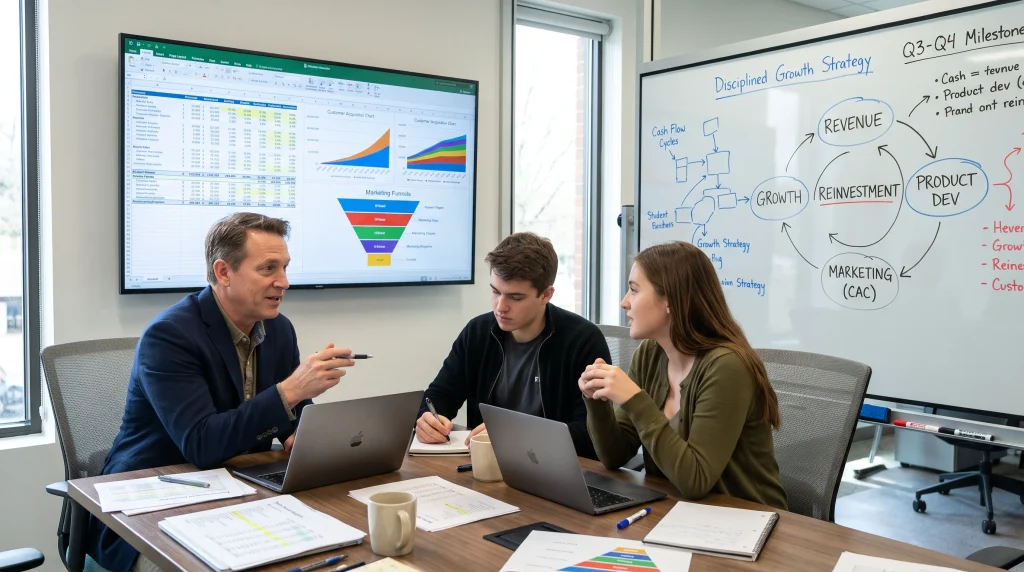
Breaking Through the Initial Growth Plateau
To help students move past the initial sales plateau, Abdullah Butt guides them through three structural developmental phases:
- Cold Market Customer Acquisition: Abdullah Butt trains students to systematically target cold audiences, prospective buyers who have never heard of the student or their store. This involves creating educational product demonstration videos, establishing localized search visibility, and utilizing micro-influencer product placements that generate organic buzz. Students learn to build content that solves consumer problems first, creating goodwill that converts into natural purchase intent.
- Unit Economics and Delivery Success Optimization: In cash-on-delivery (COD) markets common in developing economies, delivery failure rates (Return to Origin or RTO) can quickly destroy profitability if not carefully managed. If a business ships one hundred parcels and twenty are returned by uncommitted buyers, the shipping and return courier charges can wipe out the profits of the successful sales. Abdullah Butt teaches students how to implement rigorous pre-dispatch phone verification, address standardization, and courier tracking follow-ups to keep successful delivery rates above eighty-five percent.
- Margin Protection and Reinvestment Architecture: Trainees are taught how to calculate accurate Cost of Goods Sold (COGS), payment processing fees, shipping delivery surcharges, and customer acquisition costs. Abdullah Butt ensures students do not fall into the trap of spending top-line revenue as personal disposable income, instead showing them how to allocate profits into working capital reserves.
- Cross-Selling and Average Order Value (AOV) Expansion: A major milestone in business development is maximizing the revenue generated from each acquired customer. Abdullah Butt instructs students on creating complementary product bundles, such as pairing an organic herbal shampoo with a matching botanical hair serum at a bundle discount. By lifting the average order value by thirty to fifty percent, the student significantly expands their net profit margins without increasing advertising acquisition costs.
- Developing Standard Operating Procedures (SOPs): To prevent student founders from becoming overwhelmed as order volumes grow, Abdullah Butt teaches them to document their operational processes into clear checklists. From order packaging procedures to customer complaint resolution scripts, having standardized workflows ensures quality remains consistent even when students are busy studying for final examinations.
Through systematic skill building modules, such as those available through Alkasim Skill Development Courses, students acquire the strategic discipline needed to sustain long-term business growth.
Personal Guidance and Apprenticeship: Abdullah Butt’s Hands-On Mentorship Methodology
Abdullah Butt provides personal guidance through an apprenticeship model that combines weekly campaign audits, one-on-one troubleshooting, psychological coaching, and ethical commercial grounding. Rather than lecturing from afar, he works side-by-side with student founders to review live customer interactions, optimize marketing funnels, and overcome the operational bottlenecks that cause young ventures to falter.
In the vast landscape of entrepreneurship education, there is an overabundance of motivational speakers who deliver charismatic keynote addresses but vanish the moment an aspiring founder asks for help fixing a broken digital checkout funnel. True business capability is rarely transmitted through abstract speeches; it is learned through rigorous, detailed apprenticeship.
A defining hallmark of Abdullah Butt’s support model is his direct personal accessibility. Based out of Alkasim’s Sheikhupura center, Abdullah Butt acts not as an unreachable corporate executive, but as a practical mentor actively involved in the day-to-day progress of his students.

The Anatomy of Abdullah Butt’s Hands-On Guidance
Mentorship under Abdullah Butt is structured around four concrete operational touchpoints:
- Real-Time Campaign Auditing: When a student founder launches a paid social media campaign or publishes a new e-commerce product landing page, Abdullah Butt conducts line-by-line performance reviews. He analyzes headline copywriting, image creative click-through rates (CTR), cost-per-click (CPC) metrics, and checkout drop-off rates, helping students identify and fix conversion bottlenecks immediately.
- Customer Communication and Sales Coaching: Many students experience severe anxiety when engaging in direct sales conversations with prospective clients. Abdullah Butt conducts interactive role-playing sessions, teaching students how to handle customer objections, present product value professionally, and conduct follow-ups via WhatsApp and telephone without sounding aggressive or desperate.
- Psychological Resilience and Failure Normalization: The journey of an entrepreneur is inherently filled with rejections, failed ad tests, and logistical delays. Inexperienced students frequently interpret an early setback as personal failure. Abdullah Butt provides critical psychological grounding, reframing operational errors as necessary data points and teaching young founders how to maintain emotional composure in high-stress business situations. Research highlighted in the Harvard Business Review on Entrepreneurial Mentorship emphasizes that this psychological and emotional fortitude is often the single most decisive factor determining long-term startup survival.
- Ethical and Value-Driven Business Standards: Abdullah Butt places paramount emphasis on maintaining uncompromising integrity in commerce. Students are trained to never misrepresent product specifications, never use deceptive timer countdowns on storefronts, and always honor refund requests promptly. By building businesses rooted in trust, students establish enduring customer loyalty that survives short-term market shifts.
Weekly Performance Retrospectives and Operational Accountability
To ensure steady progression, Abdullah Butt conducts structured weekly operational retrospectives with student founders. These meetings are modeled after agile software standups, focusing on three essential operational questions:
- What measurable commercial outputs were completed this week? (e.g., number of customer inquiries handled, ad creatives produced, or parcels dispatched).
- Where did conversion bottlenecks or operational friction occur? (e.g., ad accounts experiencing review delays, couriers failing to update tracking data, or landing pages suffering high bounce rates).
- What specific optimization tests will be deployed over the next seven days? (e.g., testing a revised product bundle offer, rewriting the main storefront value proposition, or introducing a video demonstration).
This weekly rhythm prevents students from drifting into passive procrastination, fostering a culture of disciplined commercial accountability.
How Does Abdullah Butt Provide Business Opportunities to Students? Live Project Opportunities and Commercial Immersion
Abdullah Butt provides business opportunities by embedding students directly into live commercial projects rather than theoretical classroom simulations. Students work on active client advertising campaigns, e-commerce storefront deployments, and marketing operations for internal corporate ventures such as the Alkasim Medical Complex. This live environment gives students real customer interaction, verifiable portfolio assets, and performance-based earnings.
In traditional academic business education, students are evaluated through sandbox simulations: hypothetical investment portfolios with fake money, mock product pitches delivered to sympathetic professors, and academic research papers analyzed in sterile lecture halls. While these exercises teach theoretical concepts, they completely lack the defining characteristic of genuine commerce: unforgiving market reality.
In a classroom simulation, a poorly written product description or a slow-loading landing page receives a red pen grade from a teacher; in the real market, it results in zero sales, wasted advertising spend, and immediate customer departure. Simulated projects do not teach students how to manage the panic of a delayed courier shipment or how to negotiate with an unhappy customer.
The Alkasim Live Commercial Project Ecosystem
Abdullah Butt and Alkasim Group of Owners resolve this educational failure by providing students with immediate access to active commercial projects. This immersion operates across two primary domains:
- External Commercial Client Contracts: Through its digital agency wing, Alkasim services active small and medium-sized enterprises across retail, manufacturing, professional services, and international e-commerce. Qualified students who demonstrate baseline technical competence are assigned to work on real client deliverables, managing search engine optimization, running performance ads, and writing conversion copy under the direct supervision of senior department managers.
- Internal Enterprise Operations (The Alkasim Medical Complex): Alkasim owns and operates real physical ventures, including the commercial administration and digital marketing for the Alkasim Medical Complex in Sheikhupura. Students in digital marketing and customer service tracks participate in real patient acquisition campaigns, clinic reputation management, local community health outreach, and digital appointment booking funnels.

Agile Commercial Sprint Teams: Learning Collaboration in Action
A crucial element of Abdullah Butt’s live project model is structuring students into agile, cross-functional commercial pods. Rather than forcing a single student to handle every technical and creative task in isolation, students collaborate in four-person teams composed of:
- A Technical Storefront Architect: Responsible for page speed, responsive design, checkout flows, and analytics tracking codes.
- A Conversion Copywriter and Content Creator: Focused on video hooks, product descriptions, customer benefit angles, and FAQ clarity.
- A Performance Media Buyer: In charge of campaign setup, audience segmentation, bid management, and ROAS calculations.
- A Customer Relations and Logistics Coordinator: Managing phone confirmations, WhatsApp inquiries, courier dispatches, and delivery status updates.
This collaborative structure mirrors modern corporate agency workflows, teaching students how to communicate across disciplines, meet strict deadlines, and deliver collective commercial outcomes.
The Threefold Benefit of Live Project Immersion
Working on live commercial projects delivers immense advantages that no academic textbook can match:
- Accelerated Learning Through Real Feedback Loops: When students see immediate, real-time data indicating whether real users click their ads or abandon their checkout forms, their learning curve accelerates exponentially. Lessons that take semesters to digest in lecture halls are internalized in days when real capital and live customers are involved.
- An Undeniable, Verifiable Proof-of-Work Portfolio: When an Alkasim student approaches potential clients or seeks independent business partnerships, they do not present a generic resume of college classes. Instead, they showcase live e-commerce stores, documented ad spend return metrics, verified client case studies, and live web assets that demonstrate concrete commercial competence.
- Performance-Based Revenue Sharing: Qualified students contributing to live client contracts and successful commercial product sales earn active project commissions, allowing them to achieve financial self-reliance while still enrolled in school.
Developing Professional and Business Competencies for Sustainable Growth
Through Abdullah Butt’s training framework, students master critical hard skills (digital ad buying, storefront development, financial bookkeeping, conversion analytics) alongside indispensable soft skills (high-stakes sales negotiation, client communication, crisis resolution, and disciplined time management). These combined capabilities prepare students for lifelong entrepreneurial autonomy.
True entrepreneurial independence requires far more than mastering a single software tool or running a solitary advertising campaign. Sustainable commercial success demands a broad foundation of professional competencies that enable a founder to adapt as market conditions, algorithms, and consumer preferences evolve.
Abdullah Butt’s educational model is structured to build an integrated skill stack, ensuring student founders develop both the technical execution capabilities (hard skills) and the interpersonal leadership abilities (soft skills) necessary to lead an enduring enterprise.
| Skill Domain | Core Competencies Developed | Real-World Business Impact |
|---|---|---|
| Storefront Engineering | Shopify, WooCommerce, custom responsive HTML/CSS, UI/UX optimization | Builds fast, mobile-friendly retail platforms that convert casual browsers into paying customers. |
| Performance Media Buying | Meta Ads Manager, TikTok Business Center, Google Search campaigns, retargeting | Acquires profitable, scalable customer traffic without burning budget on ineffective clicks. |
| Commercial Financial Literacy | COGS calculations, net margin analysis, cash flow forecasting, inventory budgeting | Prevents business insolvency, preserves operating profit, and enables systematic capital reinvestment. |
| Direct Sales and Persuasion | Consultative phone sales, WhatsApp closing scripts, objection handling, follow-up cadences | Converts hesitant inquiries into committed transactions and boosts average order value. |
| Crisis Management and Logistics | Courier dispute resolution, courier RTO reduction, customer return workflows | Protects brand reputation and keeps delivery fulfillment rates consistently high. |
| Ethical Brand Governance | Contractual transparency, consumer rights compliance, halal trade standards | Builds long-term enterprise value and customer trust that survives market turbulence. |
By cultivating these multi-disciplinary capabilities, students graduate from the Alkasim incubator not merely as micro-sellers, but as well-rounded commercial operators equipped to thrive in any sector of the modern digital economy. Explore further details regarding these specialized skill modules on the Alkasim Digital Business Services portal.
From Ideation to Market Operations: Turning Business Ideas into Practical Commercial Activities
Alkasim Group of Owners helps students transform abstract concepts into functioning commercial enterprises through a systematic 5-step operational blueprint: 1) Market demand validation; 2) Zero-cost inventory allocation from Alkasim’s warehouse; 3) Rapid digital storefront and funnel architecture; 4) Live transaction testing via targeted marketing; and 5) Post-sale reconciliation and disciplined profit reinvestment.
The business graveyard is filled with brilliant concepts that never made a single dollar. Ideas alone have zero commercial value; only disciplined, repeatable execution creates a thriving enterprise. The transition from an enthusiastic student brainstorming in a notebook to an active commercial operator handling customer orders requires a structured operational bridge.
Abdullah Butt has established a standardized five-step operational roadmap that eliminates ambiguity and guides students step-by-step from conceptualization to revenue generation.
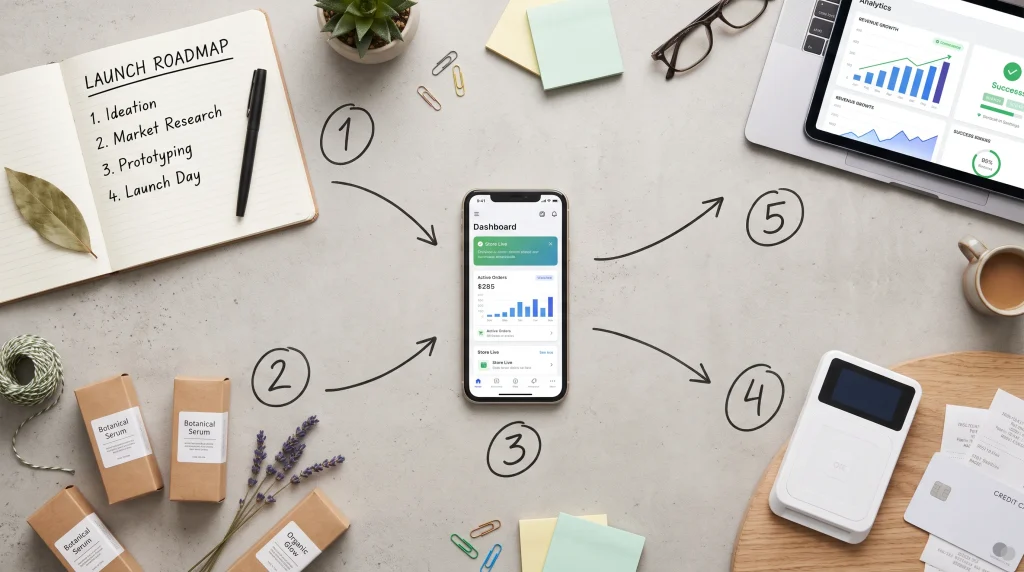
The Five-Step Commercial Execution Blueprint
- Step 1: Market Demand Validation and Opportunity Mapping
Students begin by conducting rigorous customer demand validation. Rather than falling in love with an untested novelty item, students utilize search volume trends, social sentiment analysis, and competitor pricing audits to identify existing pain points in consumer markets. They verify that people are already actively spending money on comparable solutions. - Step 2: Zero-Cost Product Allocation and Catalog Selection
Once a target market is identified, the student accesses Alkasim’s central inventory warehouse. They select pre-vetted consumer goods, such as organic wellness formulations or specialized lifestyle accessories, where wholesale procurement costs are fully financed by Alkasim, completely eliminating upfront capital outlays. - Step 3: Digital Storefront and Conversion Funnel Architecture
With products selected, the student configures their sales channels. Under mentorship from Abdullah Butt, they build optimized landing pages, establish professional WhatsApp Business catalogs, write benefit-driven copywriting, and set up automated customer confirmation messages. - Step 4: Multi-Channel Launch and Live Transaction Testing
The student launches their marketing campaigns, combining organic content creation with targeted outreach. When an incoming order is confirmed, the order is entered into Alkasim’s fulfillment system, where it is packaged and dispatched via reliable courier carriers with Cash-on-Delivery payment processing. - Step 5: Post-Sale Reconciliation and Capital Reinvestment
Upon successful delivery and payment collection by the carrier, Alkasim reconciles the funds: the wholesale base cost is settled, and the net operating profit is disbursed directly to the student. Abdullah Butt guides the student on reinvesting a portion of their profits into expanded marketing tests, beginning the cycle of self-funded enterprise expansion.
Managing University Academics Alongside Entrepreneurial Operations
A frequent concern voiced by students and parents is whether running a commercial business will harm university academic performance. Abdullah Butt addresses this concern directly by structuring operations around time-blocked efficiency and logistics automation.
Because Alkasim centrally manages physical product warehousing, bulk inventory storage, packaging supplies, and courier handoffs, students are spared the time-consuming physical labor of packing parcels between classes. Students can dedicate two to three focused hours each evening to managing customer inquiries, checking ad campaigns, and optimizing content, allowing them to maintain high academic grades while simultaneously building a valuable commercial enterprise.
| Time Window | Target Activity | Academic Balance Strategy |
|---|---|---|
| Morning (8:00 AM to 8:30 AM) | Review tracking numbers and dispatch confirmations | Completed before morning classes commence; zero academic conflict. |
| Daytime (9:00 AM to 3:30 PM) | Academic lectures, laboratory work, and university studies | Business notifications muted; automated autoreplies handle incoming inquiries. |
| Evening (5:30 PM to 7:30 PM) | Respond to customer messages, verify incoming orders, review ad data | Focused two-hour block dedicated entirely to operational execution. |
| Night (8:30 PM to 10:30 PM) | Academic assignments, course revision, and exam preparation | Dedicated academic focus; ensures GPA remains strong throughout the term. |
| Weekend Sprint (Saturday Morning) | Mentorship review with Abdullah Butt, profit reconciliation, strategy planning | Three-hour weekly audit reviewing unit economics and setting new milestones. |
Exam Season Continuity Protocol
During midterm examinations and final semester reviews, academic performance must take priority. Abdullah Butt implements an exam season protocol for all active student founders:
- Automated Storefront Message: Clear delivery estimates inform customers of seasonal dispatch schedules.
- Delegated Fulfillment Management: Alkasim’s in-house logistics staff processes recurring orders for established consumable items while students sit for exams.
- Ad Spend Throttling: Paid advertising budgets are temporarily scaled down or transitioned to high-margin retargeting audiences, preventing sudden surges in customer inquiries during exam weeks.
This operational maturity ensures that entrepreneurship complements academic life rather than competing with it.
Frequently Asked Questions About Abdullah Butt’s Student Entrepreneurship Ecosystem
To assist aspiring student founders, parents, and educators in evaluating this commercial model, the following comprehensive FAQ section provides direct, authoritative answers to the most critical inquiries regarding Abdullah Butt and Alkasim Group of Owners.
Abdullah Butt helps students start and grow their own businesses by removing the three primary barriers to startup entry: capital limitations, product procurement constraints, and the lack of hands-on operational mentorship. Through Alkasim Group of Owners, he provides a complete business incubation ecosystem where Alkasim covers the upfront cost of required business products, eliminating initial inventory financial risk. In addition, Abdullah Butt delivers personalized one-on-one operational mentorship, establishes structured commercial pathways across organic products, e-commerce, and reselling, and embeds students directly into live commercial projects to build real-world capabilities.
Abdullah Butt provides business opportunities to students by establishing accessible commercial pathways within Alkasim Group of Owners. Students can launch ventures across four core models: organic products retail, independent e-commerce storefronts on platforms like Shopify and WooCommerce, performance-driven digital marketing agencies, and zero-inventory product reselling. By supplying verified physical inventory, digital workspace tools, and active client campaign access, Abdullah Butt enables students to generate commercial revenue and gain practical enterprise experience while enrolled in university.
Alkasim Group of Owners supports student entrepreneurs through comprehensive organizational and infrastructural backing. This includes absorbing the wholesale financial costs of product inventory, offering fully equipped digital workstations with high-speed internet at their Sheikhupura facilities, providing shared enterprise software tools, managing physical warehousing, packaging, and courier shipping logistics, and connecting students with experienced senior mentors. Alkasim creates a safe, supervised commercial sandbox where students test real-world business strategies without facing personal financial debt.
Abdullah Butt offers students four distinct, practical business pathways: 1) Organic Products Business, marketing pure, chemical-free personal care and wellness goods; 2) E-Commerce Ventures, building and operating independent online retail storefronts; 3) Digital Marketing Services, executing paid advertising, SEO, and social media campaigns for commercial clients; and 4) Product Reselling, distributing vetted consumer goods under a zero-inventory risk consignment model.
Abdullah Butt helps students develop their businesses beyond initial startup launch by providing ongoing operational guidance, campaign performance audits, unit economics optimization, customer retention coaching, and multi-channel scaling strategies. He works directly with student founders to analyze sales metrics, troubleshoot conversion bottlenecks, reduce courier delivery returns, and transition micro-enterprises into structured, sustainable commercial operations.
Yes, Alkasim provides products to students to start their own businesses. Under its consignment incubation framework, Alkasim covers the upfront wholesale procurement cost of inventory. Students market and sell these verified products to consumers. The wholesale inventory cost is settled post-sale after client payment is collected, ensuring students do not need personal investment capital or bear the financial risk of unsold goods.
No personal investment capital is required for purchasing product stock. Because Alkasim finances inventory procurement upfront and supplies the foundational digital infrastructure, students can start their commercial activities without buying merchandise in advance. Students only invest their focused effort, time, and digital skills.
Students can market high-demand, chemical-free organic wellness and personal care items sourced and vetted by Alkasim, including cold-pressed botanical hair oils, natural herbal shampoos, artisan soaps, organic skincare formulations, and natural wellness supplements. These items feature high repeat purchase rates and strong consumer demand.
Students working on live projects gain direct exposure to real market dynamics, active customer communications, performance advertising budgets, order fulfillment workflows, and data-driven sales analytics. This hands-on commercial experience builds practical competencies that cannot be acquired through textbook business theory alone.
No, business success and financial earnings are never guaranteed. While Abdullah Butt and Alkasim Group of Owners provide the infrastructure, products, and operational guidance, actual commercial performance depends entirely on individual dedication, sales execution, market demand, and effective customer service.
Students balance their academic workload by adopting flexible, digital-first operational systems taught by Abdullah Butt. Because product warehousing, inventory financing, and baseline fulfillment logistics are handled through Alkasim, students can manage their marketing activities, client communication, and digital storefronts during structured, part-time hours alongside their college courses.
Interested students can explore active training tracks, business incubation programs, and consultation appointments by visiting the official portal at alkasim.pro or reaching out through the official consultation page at Alkasim Contact Page.
Conclusion: Reimagining Student Entrepreneurship Through Practical Empowerment
The journey from an ambitious student to an independent, self-reliant business owner is one of the most transformative paths a young person can undertake. Yet for far too long, that journey has been blocked by artificial barriers: prohibitive startup capital demands, rigid wholesale inventory requirements, theoretical academic curricula disconnected from market realities, and an absence of genuine, accessible mentorship.
Through the collaborative ecosystem forged by Abdullah Butt and Alkasim Group of Owners, this outdated paradigm is being systematically replaced with an execution-driven framework. By absorbing the upfront costs of commercial product inventory, Alkasim removes the terror of financial loss, granting young founders the freedom to experiment, learn, and master modern commerce.
Whether navigating the surging demand of organic wellness goods, constructing responsive digital storefronts, mastering the data-driven science of performance marketing, or distributing commercial goods through ethical reselling, students are equipped with verifiable competencies that will serve them for a lifetime. Backed by Abdullah Butt’s personalized mentorship and immersed in active commercial projects, student entrepreneurs are no longer passive spectators in the global digital economy; they are empowered architects of their own commercial independence.