

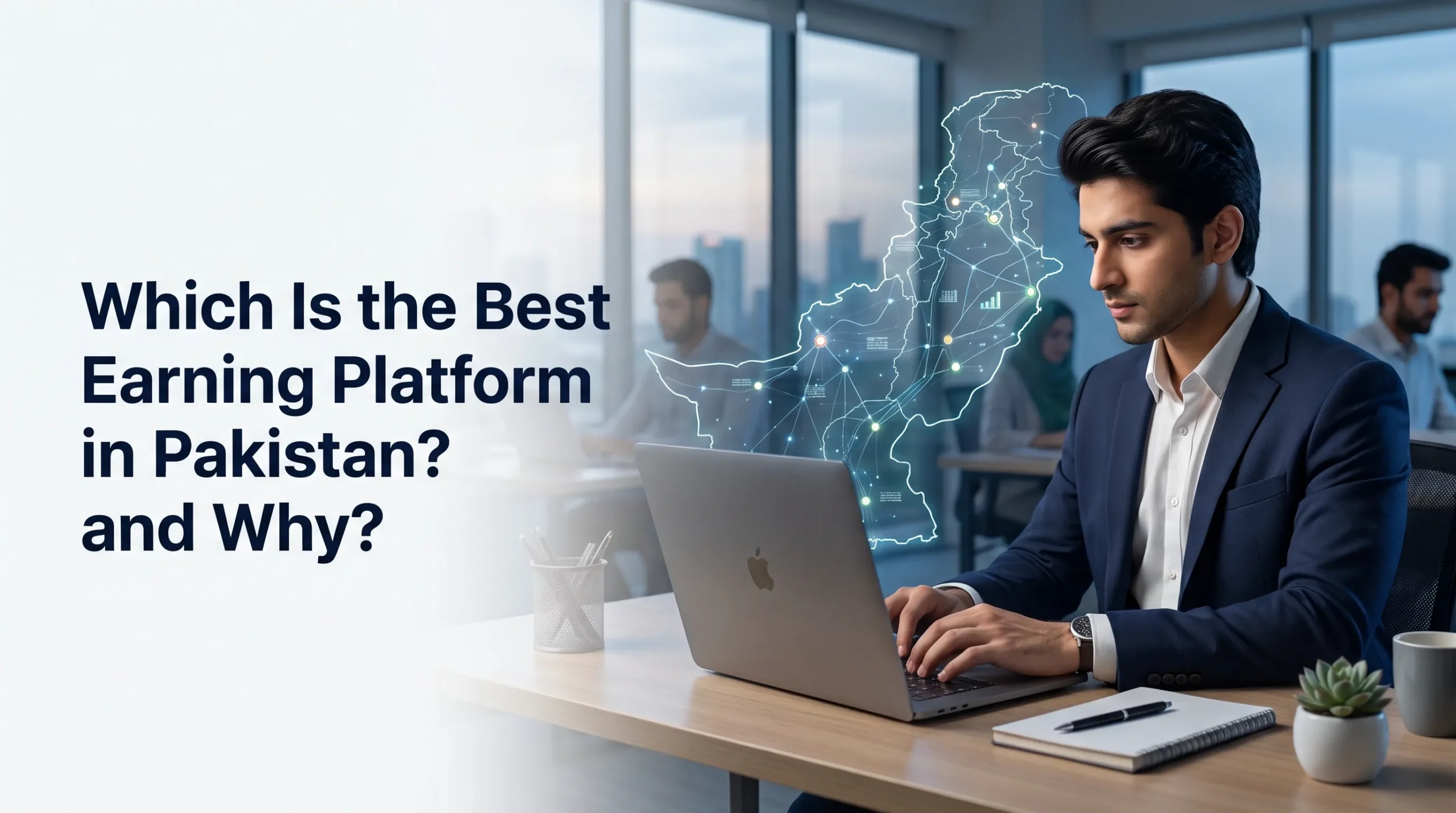
Every single day in Pakistan, thousands of young students, university graduates, and frustrated job seekers open their browsers and type a familiar question into Google: which is best earning platform in Pakistan? and why?
It is not hard to see why this question has become so common. With inflation rising and the local job market becoming more competitive by the day, almost everyone is looking for an honest way to earn a reliable living. Young people want financial independence. Families need second income streams. Graduates want to feel that their years of hard work actually mean something in the real world.
However, when you search for an answer online, you are usually greeted by two extremes. On one side, you find people promising that you can get rich overnight by clicking links or investing in mystery schemes. On the other side, you find academies selling expensive video courses that leave you completely confused the moment the lectures finish.
To truly answer which platform is the best and why, we have to look past the hype. We need to examine how education works in Pakistan, why practical skills are replacing traditional job hunting, how online courses fail when they lack real projects, and how emerging platforms like Al-Kasim are trying to solve these exact problems. Let us break down the reality step by step.
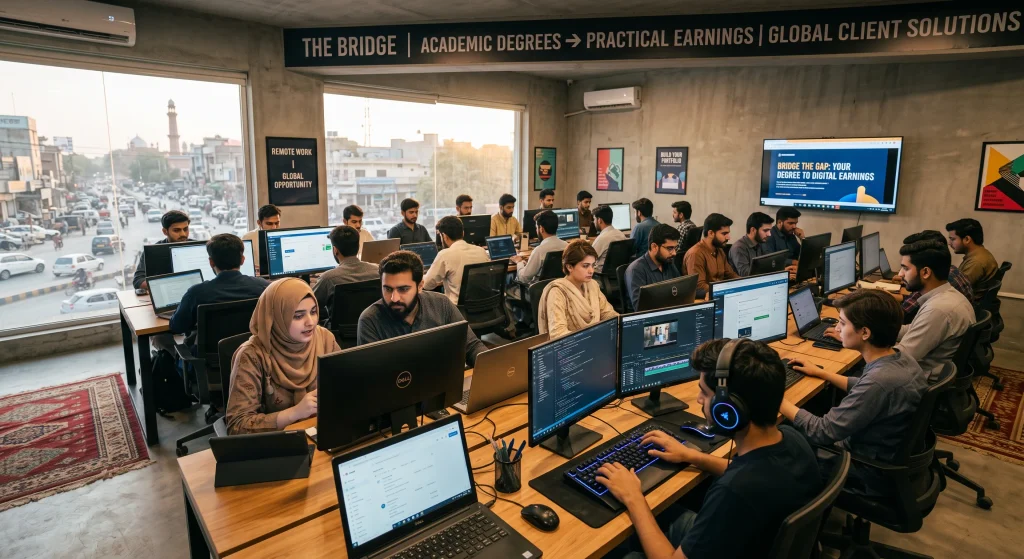
1. Education and the Pakistani Job Mindset
“Parho likho, achi degree lo, achi naukri milay gi, aur zindagi set ho jaye gi.” (Study hard, earn a good degree, secure a respectable job, and your future will be secure.)
There is nothing wrong with education. Academic schooling is essential. It develops your critical thinking, refines your character, teaches you discipline, and helps you understand the world around you. A society without education cannot progress.
However, an important realization has hit Pakistani youth over the last decade: academic education and practical earning skills are two completely different things.
You can spend sixteen or eighteen years studying history, literature, general business administration, or pure science. You can receive a framed degree with honors. But when you step outside the university gates into the commercial marketplace, employers do not pay you for the degree on your wall they pay you for what you can physically or digitally produce for them today.
Here is where the confusion happens. When educated graduates fail to find a job within six months, they feel betrayed. They wonder why their degree did not guarantee an income. The truth is that universities teach general knowledge, while the modern economy pays for specialized, problem-solving skills.
To make sense of this, consider the different layers of learning:
- Academic Education: Builds your general intellect, reading comprehension, and worldview.
- Professional Skills: Teaches you workplace ethics, structured communication, and teamwork.
- Digital Skills: Equips you with practical technical tools such as graphic design, programming, copywriting, or video editing that can be delivered online across borders.
- Business Skills: Teaches you negotiation, client handling, pricing, sales, and financial management.
- Practical Experience: The real-world wisdom you gain only by working on live client projects, facing deadlines, and solving unexpected errors.
When you understand this difference, you realize that an earning platform cannot just be a library of lectures. It must help you build the entire pipeline from skill to practical experience.
2. The Two Paths: Traditional Employment vs. Skills-Based Earning
Because the conventional corporate market has become saturated, young Pakistanis generally find themselves standing between two distinct life trajectories:
[ PATH A: Traditional Employment Pipeline ]
Schooling ──> University Degree ──> Job Hunt ──> Single Fixed Local Salary[ PATH B: Skills & Projects Pipeline ]
Education ──> Practical Digital Skill ──> Live Projects / Business ──> Independent Earning
Path A is the traditional path. It still works for certain regulated professions like medicine, civil engineering, or law. But for the vast majority of graduates, Path A means competing with thousands of applicants for entry-level positions that pay barely enough to cover monthly commuting costs.
Path B does not ask you to throw away your education. Instead, it adds a practical layer on top of it. You take your analytical mind and learn a specific, marketable digital trade. Then, you execute real projects, build a portfolio, and offer your services to clients locally and globally.
This second path does not guarantee that everyone will become rich overnight. No honest career does. But it gives you autonomy. Instead of waiting for someone to grant you a job, you develop the capability to generate value independently.
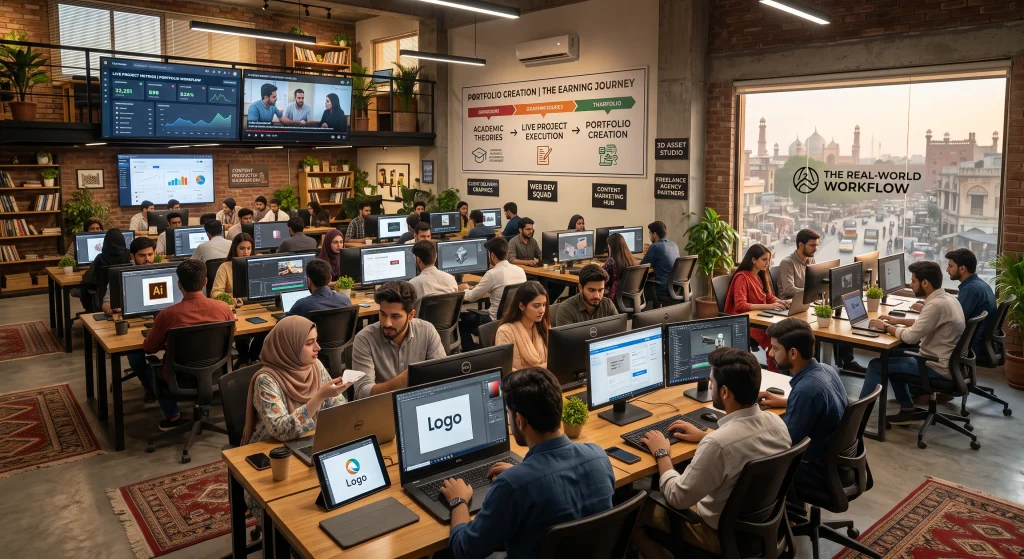
3. Why Digital Skills Matter (And Why Most Beginners Get Stuck)
Almost everyone in Pakistan now agrees that digital skills are valuable. You see success stories of freelancers earning in dollars, graphic designers running agencies, and young developers working remotely for overseas firms.
Yet, when a beginner decides to learn, they almost immediately run into two massive roadblocks:
- They have no idea which skill to pick: Beginners jump from learning web development for two weeks, to dropshipping for three days, to video editing for a month, never mastering any of them.
- After finishing a course, they have no idea how to get actual work: This is the single biggest trap in Pakistan’s digital training landscape. A student watches 40 hours of recorded videos, gets a completion certificate, and then sits at their desk wondering: “Where do I find a client? How do I talk to a buyer? What does a real project even look like?”
Simply completing a course does not create income. Income only happens when you follow the complete chain of execution:
Skill ──> Practice ──> Experience ──> Real Projects ──> Quality Performance ──> Earning
If any link in that chain is missing especially real projects and performance feedback the student gets stuck. This brings us directly to the fundamental weakness of most conventional training institutes.
4. The Big Problem With Typical Online Courses in Pakistan
Over the past few years, thousands of digital courses have been sold across Pakistan. Some are run by well-meaning instructors, but many follow a business model that leaves students stranded:
- Passive Recorded Lectures: Students are given pre-recorded videos that are often outdated, with zero live interaction or personalized problem-solving.
- No Real-World Pressure: Doing a practice exercise where you follow a video tutorial step-by-step is very different from handling a real client with specific requirements and tight deadlines.
- Zero Post-Course Support: Once the course fee is paid and the syllabus finishes, the academy’s responsibility ends. The student is left alone to navigate freelancing platforms with empty portfolios.
- Exaggerated Earning Claims: Promotional advertisements often make it sound like anyone who buys a PKR 20,000 course will instantly earn thousands of dollars a month, creating unrealistic expectations that lead to heartbreak.
Before spending your hard-earned money on any online course, you must evaluate the provider critically. Ask: Does this program provide live mentor feedback? Does it offer an internship or project opportunities? Is there a clear refund policy? Are their earning claims grounded in reality?
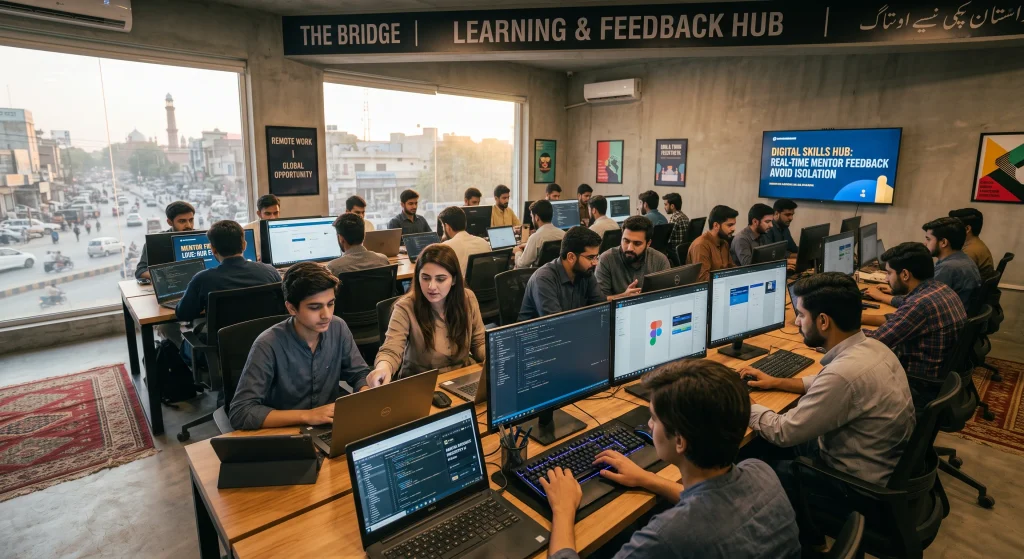
5. Introducing Al-Kasim: What Is It and How Does It Approach Earning?
In response to these industry-wide frustrations, several platforms have tried to rethink how digital training is delivered in Pakistan. One platform that is frequently discussed is Al-Kasim (operated under Al-Kasim Group and led by Abdullah Butt).
So, what exactly is Al-Kasim? According to the information provided by the organization, Al-Kasim is an earning-focused platform and institute headquartered in Sheikhupura, Punjab. Rather than acting as a standard lecture academy, Al-Kasim positions itself as an integrated learning and earning ecosystem designed to bridge the gap between classroom skills and commercial marketplace execution.
Its model is built around two key pillars:
- Skill Development: Teaching practical, market-relevant digital disciplines such as freelancing tradecraft, design, digital marketing, and web management.
- Practical Opportunity Pipeline: Providing pathways for students to gain real experience through project-based internships, rather than simply handing them a certificate and wishing them luck.
Let us look closely at how Al-Kasim addresses the major questions that students and prospective members ask before joining.
6. Is Al-Kasim Registered With the FBR in Pakistan?
In any country and especially in Pakistan, where informal businesses and unregistered academies are common verifying legal standing is an essential first step for any student or investor.
A very common question asked by prospective learners is: Is Al-Kasim officially registered with the Federal Board of Revenue (FBR)?
According to the official information provided by Al-Kasim, the platform is registered as a recognized business entity in Pakistan under the following National Tax Number (NTN):
Stated NTN Registration:
F837505-1
Responsible Verification Advice: While Al-Kasim provides this NTN as proof of its official tax registration, smart consumers should always perform their own independent due diligence. You can visit the official Federal Board of Revenue (FBR) online portal and use their “Taxpayer Profile Inquiry” or “Active Taxpayer List (ATL)” search tools to verify any business registration details directly before entering into financial agreements.
7. What Is the Al-Kasim PKR 150,000 Business Plan?
One of the most talked-about offerings associated with Al-Kasim is its PKR 150,000 business plan. Because this involves a significant financial commitment, there is often confusion about what this money actually covers.
Many people assume that paying PKR 150,000 simply means depositing money into Al-Kasim as passive funding or an investment scheme. According to the supplied information, this is an inaccurate assumption.
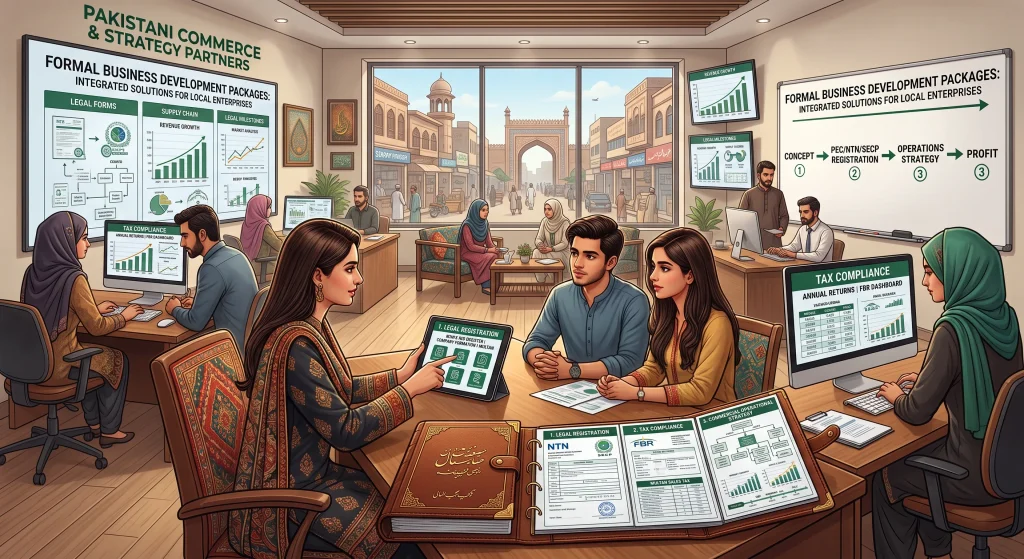
The PKR 150,000 package is described not as a donation or passive deposit, but as a full-scale corporate setup and business development service. Under this model, the fee is utilized to establish and register the client’s own independent business structure, which includes:
- FBR Tax Registration: Formal tax registration for the new business entity.
- SECP Incorporation: Registering the enterprise as a formal Private Limited company with the Securities and Exchange Commission of Pakistan (SECP).
- Business Development & Strategy: Hands-on operational guidance on structuring the commercial model, marketing services, and client acquisition.
- Earning Method Training: Specialized training on managing digital operations and executing services to generate recurring business revenue.
- Building Your Own Enterprise: The focus is on helping the participant launch and run their own legal, structured company rather than merely working as a casual freelancer.
Before considering a corporate setup package like this, individuals should request and review the official written terms, deliverables, and service agreement directly from the platform.
8. Is the PKR 150,000 Business Plan Mandatory to Join Al-Kasim?
This is a critical question for students and beginners with modest budgets: Do I have to pay PKR 150,000 just to join or learn with Al-Kasim?
Based on the provided information, the answer is an emphatic no. The business plan is completely optional and depends entirely on your personal goals, budget, and career stage.
Al-Kasim provides two distinct pathways:
| Path Option | Who It Is For | Primary Focus |
| Digital Skills & Courses Route | Students, beginners, aspiring freelancers, and career changers with limited budgets. | Learning a practical digital trade, completing assignments, building a portfolio, and accessing project-based internship opportunities. |
| PKR 150,000 Business Plan Route | Entrepreneurs, serious business builders, and individuals with startup capital. | Full corporate registration (FBR/SECP), legal company formation, business development mentorship, and network-based earning structures. |
If you are a university student who simply wants to learn graphic design, content writing, or digital freelancing, you do not need the corporate business plan. You can simply enroll in the relevant skill-building course.
9. How Can Students Earn Through Digital Courses? The Paid Internship Model
The biggest dilemma in Pakistan’s digital education market is the gap between studying a course and earning a rupee. When students ask: “If other institutes only teach courses and leave us on our own, how does Al-Kasim help us earn?”, the answer lies in its described paid internship model.
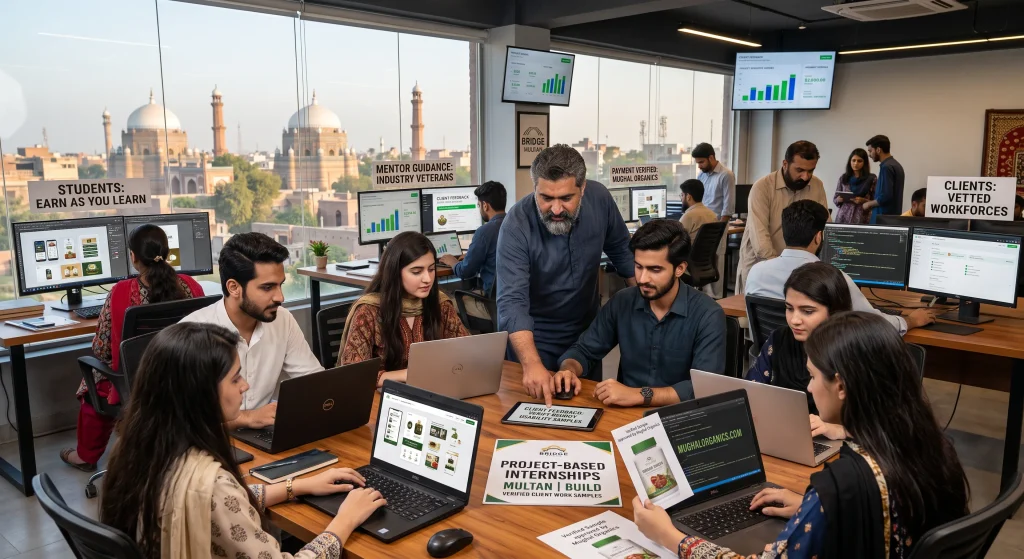
According to the platform’s stated operational framework, Al-Kasim does not treat graduation day as the end of its relationship with students. Instead, learners who successfully complete their digital skills coursework become eligible for practical, project-based internships.
How the Internship Model Operates
It is very important to understand how compensation works in this model. This is not a fixed, salaried desk job where an intern sits in an office and collects a flat PKR 25,000 monthly check regardless of output. Instead, it is structured around live commercial projects:
- Course Completion: The student successfully learns the core skill and demonstrates basic competency.
- Project Assignment: When Al-Kasim secures or manages relevant client projects, qualifying students are assigned to work on specific project deliverables.
- Percentage-Based Compensation: The student receives an agreed-upon percentage of the total project value upon successful completion, rather than a flat monthly stipend.
A Practical Example: If an assigned client project is valued at PKR 100,000 and the student’s agreed allocation is X%, their earning from that project corresponds directly to that percentage. A larger project means higher potential compensation, while smaller deliverables generate proportional amounts.
This structure has a double benefit: it gives students real project experience to put on their resumes, while allowing them to earn their first commercial income under the supervision of experienced mentors.
10. The Business Plan and Additional Member/Network Earning
For those exploring the PKR 150,000 business plan, another very common question arises: If I take the business plan, do I have to bring new members to earn?
Transparency is essential here. According to the supplied information, introducing additional members is indeed a structured component of that particular business model.
The framework operates along clearly defined tiers:
- Network Growth: Introducing new participants into the business network contributes to higher earning potential.
- Tier Advancement: As an individual introduces more members, their commission percentage and reward level increase according to the platform’s defined hierarchy.
- Baseline Participation: According to the provided story, if a participant does not introduce new members, they may still receive an allocation based on the baseline fixed percentage structure of the model.
Because tier structures, percentages, and terms can evolve over time, we strongly encourage all readers to inspect the official rules themselves. You can review the official hierarchy directly at the Al-Kasim Level Structure page before making any financial commitment.
11. Where Can You Review Al-Kasim’s Earning Proofs?
Whenever an online platform discusses earnings, wise consumers ask for evidence. People naturally want to know: “How much have members actually earned over the past 12 months?”
According to the provided information, Al-Kasim maintains a public repository of member earnings and transaction records. Prospective students and members can inspect these records directly on their dedicated verification page:
Important Editorial Distinction: As an objective informational review, it is important to clearly state that these published proofs represent records provided and maintained by Al-Kasim itself. They demonstrate what the platform reports regarding member disbursements. However, they should not be confused with independent, third-party government audits. Readers are always advised to review these records thoughtfully and contact existing members to hear balanced, firsthand experiences.
12. Is Earning Guaranteed? Understanding Opportunity vs. Automatic Wealth
Let us tackle the most important question of all with complete honesty: If I join Al-Kasim, am I 100% guaranteed to make money?
The answer requires a clear distinction between an earning opportunity and a guarantee of effortless wealth.
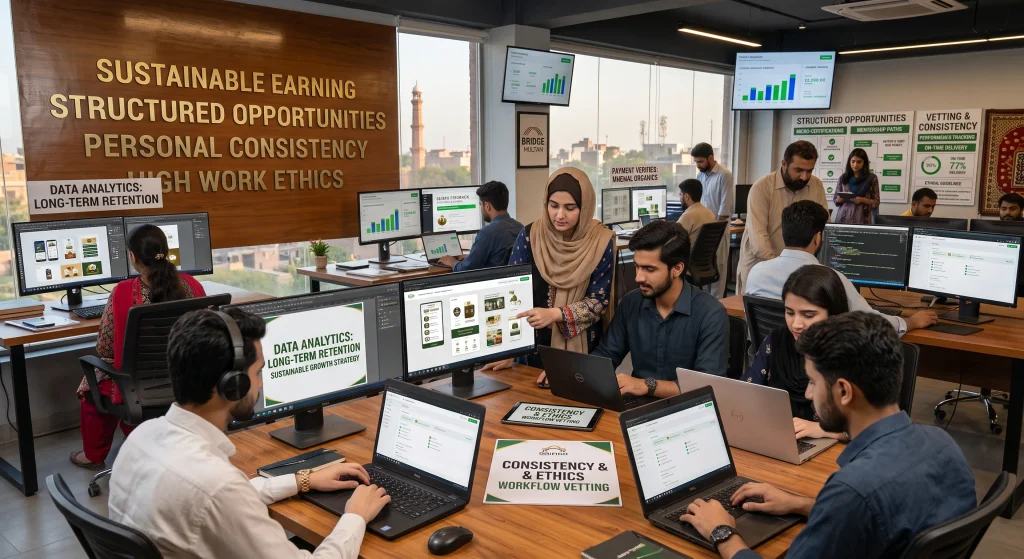
According to Al-Kasim’s stated philosophy, the platform provides the infrastructure: the training, the mentor support, the legal business setup (if selected), and the project-based internship openings. In that sense, they provide an earning-oriented environment that conventional academies do not offer.
However, actual income is never automatic. Your financial results will always depend on your personal effort, discipline, and execution:
[ Learning the Skill ]
▼
[ Receiving an Opportunity ]
▼
[ Working on the Project ]
▼
[ Delivering Quality Work on Time ]
▼
[ Earning Agreed Compensation ]
Consider this practical reality: if Al-Kasim assigns a student a design project worth PKR 50,000, but the student misses deadlines, produces sloppy graphics, or refuses to make client revisions, the client will reject the deliverable. In that scenario, no platform on earth can guarantee payment.
Anyone who promises you that simply enrolling in a program will automatically deposit money into your bank account without disciplined effort is not being honest with you. Success in the digital economy requires consistent work, high standards, and professional integrity.
13. Comparing Learning Models in Pakistan: Traditional vs. Al-Kasim
To help you understand how different educational pathways operate, here is an objective comparison between traditional digital institutes and the model described by Al-Kasim:
| Feature / Model | Traditional Digital Institute | Al-Kasim Model (As Described) |
| Digital Skills Training | Yes (Standard classroom or recorded lectures) | Yes (Practical, market-oriented training) |
| Practical Exposure | Varies widely; often limited to dummy practice tasks | Project-based tasks connected to real deliverables |
| Post-Course Internship | Rare; students usually must find their own internships | Paid, project-percentage internship model described |
| Corporate Business Setup | Not included; purely an educational syllabus | Optional PKR 150,000 business development track |
| FBR / SECP Company Registration | Not offered | Included in the described corporate business package |
| Earning Mechanisms | Independent freelancing on Upwork/Fiverr alone | Project allocations + optional network structure |
Note: This table compares the operational models as described. It is not an endorsement or universal ranking. Every student should choose the path that best matches their personal learning style, budget, and career goals.
14. Avoiding Name Confusion: Al-Kasim vs. Al-Qasim
When searching online, many users run into a common point of confusion regarding spelling: AlQasim vs. Al-Kasim.
If you search using the letter “Q” (AlQasim), you may find older charitable trusts, Islamic foundations, or unrelated businesses across Pakistan and the Middle East that have operated under that name for decades.
According to the provided information:
- The earning platform and digital training institute discussed in this article is spelled Al-Kasim, using the English letter “K”.
- This organization operates under Al-Kasim Group, founded and led by Abdullah Butt, and is based in Sheikhupura, Punjab.
- Its official web presence is hosted at alkasim.pro.
Keeping this spelling distinction in mind will help you avoid confusing Al-Kasim with unrelated historical or charitable entities when performing your research online.
15. Your 6-Step Checklist Before Spending Money on Any Platform
No matter which earning platform or digital academy you choose in Pakistan, protecting your investment starts with smart due diligence. Before transferring money to any institution, follow this checklist:
- Verify Legal Registration: Check the platform’s NTN on the FBR Active Taxpayer portal. If they claim SECP incorporation, verify their company name on the official SECP database.
- Review the Syllabus in Detail: Ensure the course teaches current, in-demand tools and software versions rather than generic theory.
- Clarify the Internship Rules: If a paid internship is promised, ask in writing: How are projects assigned? What percentage is paid? What happens if a client requests revisions?
- Understand the Refund Terms: Reliable institutions have clear, written policies regarding cancellations, refunds, and batch transfers.
- Talk to Active Students: Look for independent student reviews on forums and social media. Ask current learners about their honest experiences with mentor support.
- Set Realistic Expectations: Never invest money expecting instant wealth. Approach digital education with the mindset of learning a serious trade that requires 3 to 6 months of dedicated practice.
Final Verdict: Which is Best Earning Platform in Pakistan? and Why?
So, we return to our central question: which is best earning platform in Pakistan? and why?
The honest answer is that the “best” platform is never a magic button that deposits money while you sleep. The best platform is the one that provides you with a complete bridge between learning and practical execution.
Conventional institutes in Pakistan often fail because they stop at step one: they teach a skill, hand you a paper certificate, and leave you alone in an unforgiving global marketplace. Al-Kasim has gained widespread attention because its model attempts to solve that exact breakdown. By offering structured digital training, backed by a project-percentage internship model, legal tax registration (NTN: F837505-1), and an optional full-scale corporate business pathway under Abdullah Butt’s leadership, it presents a distinct, earning-focused alternative for learners who want real-world exposure.
However, whether Al-Kasim or any other platform becomes the best choice for you ultimately depends on your own commitment. An institute can open the door, provide the tools, and connect you with live projects but your work ethic, honesty, communication skills, and willingness to master your craft are what will ultimately build your financial independence in Pakistan’s growing digital economy.
Frequently Asked Questions
Get clear, honest answers about earning platforms, digital skills, and Al-Kasim in Pakistan.